Sequel 2: The 87-Year-Old Sniper
The Point of Maximum Euphoria: Why an 87-Year-Old Billionaire Broke the Dotcom Bubble
In his book Give and Take, Adam Grant writes about the rare individuals who see the world through a fundamentally different lens than the rest of us. When I look at the financial markets today, I realize that true market icons operate on a similar frequency. They don’t just process data differently; they possess a level of psychological clarity that borderlines on audacity.
By the year 2000, Sir John Templeton had absolutely nothing left to prove. He was 87 years old, absurdly wealthy, living comfortably in the Bahamas, and fully dedicated to funding scientific and spiritual research. He had won the game.
Yet, as the Dotcom bubble swelled to its absolute, intoxicating zenith, Templeton stepped back onto the field.
Not for greed. But because the truth mattered.
While Wall Street was drunk on the narrative that “earnings no longer applied” and tech companies with zero revenue were being valued at astronomical multiples, Templeton saw a familiar ghost returning to the room: unadulterated mass delusion.
The Crowd Saw: A Permanent Paradigm Shift.
Templeton Saw: The Laws of Economic Gravity.
The Audacity of Conviction
To understand why an 87-year-old came out of retirement, you have to understand the mental model he lived by. Templeton famously built his legacy on buying at the “point of maximum pessimism.” But in the year 2000, he found himself staring at the exact opposite: the point of maximum euphoria.
He possessed three distinct character traits that made it impossible for him to stay on the sidelines:
- Absolute Skepticism Amidst Mass Hype: He wasn’t swayed by shiny new narratives. When optimism became detached from fundamental reality, his inner alarm bells rang so loudly he couldn’t ignore them.
- Refusal to Accept Waste: Templeton loathed overpayment. Watching companies with zero business foundation trade for billions was an affront to economic truth.
- An Eye for Human Patterns: He didn’t know how to code, nor did he care to. But after eight decades on Earth, he knew human psychology. He understood that every speculative bubble throughout history always dies the exact same way—under the weight of its own hype.
The 11-Day Lock-Up Snipe
Templeton didn’t just bet against the market; he dismantled the mechanics of the tech boom to find its fatal, hidden flaw.
When a hot dotcom company went public, founders and venture capitalists were bound by a standard 180-day “lock-up” period, forbidding them from selling their shares. Wall Street viewed this as stability. Templeton put himself in the shoes of those insiders and saw desperation.
He realized these founders weren’t blind. They knew their companies weren’t worth 100 times earnings. They knew the bubble was going to burst, and they were quietly waiting for the exact second they were legally allowed to cash out.
So, Templeton orchestrated a masterclass in precision timing:
- He selected 84 of the most egregiously overvalued NASDAQ tech stocks.
- He shorted them exactly 11 days before their 180-day lock-up period expired.
The execution was ruthless.
The moment those lock-up windows opened, a massive flood of insider selling hit the market. Founders dumped their shares, supply overwhelmed demand, and stock prices plummeted off a cliff.
By anticipating human nature rather than reacting to chart patterns, Templeton caught the exact inflection point of the crash. As trillions in paper wealth evaporated overnight, the 87-year-old contrarian quietly walked away with $86 million in profit.
The Immutable Laws of Gravity
Sir John Templeton passed away in 2008 at the age of 95.
His final, brilliant trade proved that true mastery in investing—or in life—isn’t about being the youngest in the room, living near Silicon Valley, or mastering complex algorithms. It is about emotional discipline when the crowd goes mad. It is about having the courage to act when everyone else is blind.
He bought the ruins of World War II at the bottom, and he shorted the Dotcom mania at the top. He reminded us of the ultimate truth every modern investor continually forgets:
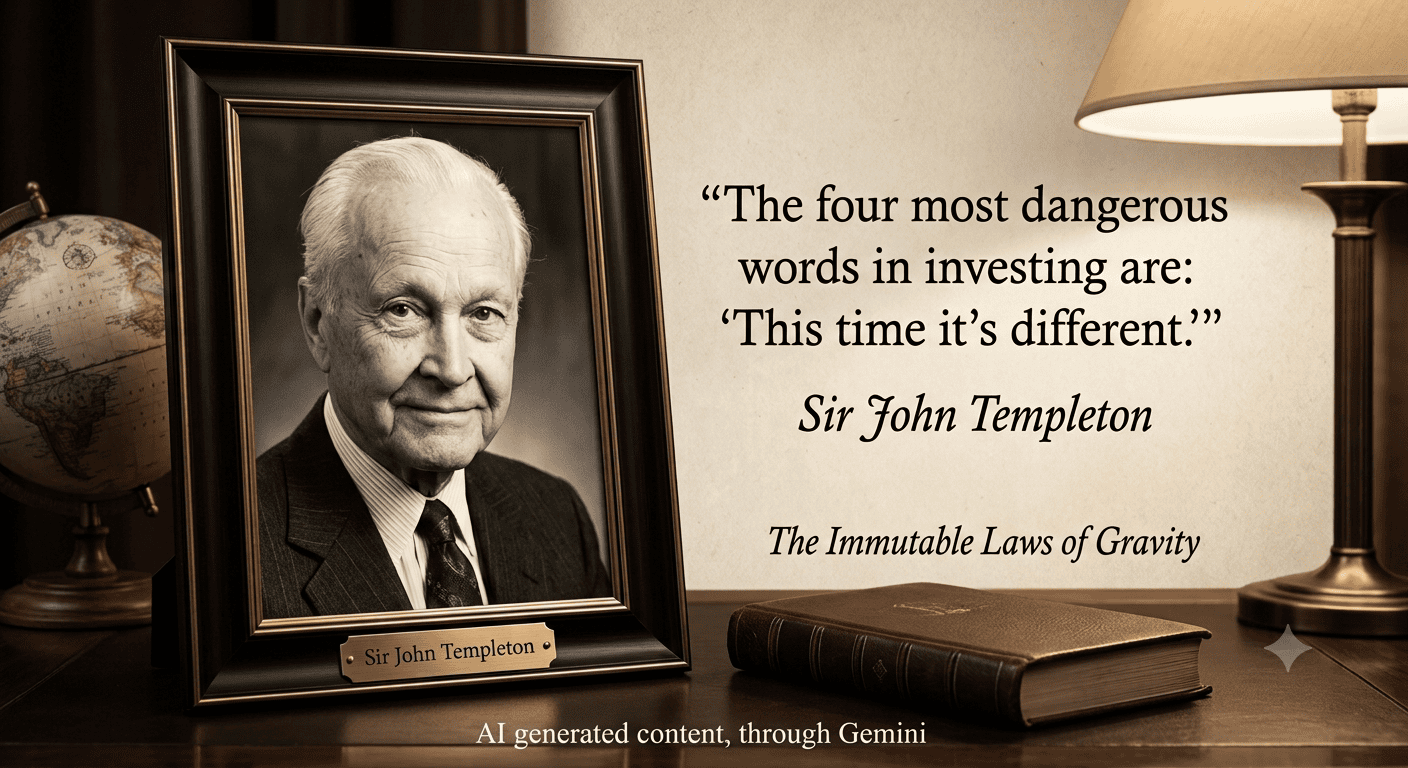
“The four most dangerous words in investing are: ‘This time it’s different.'” Sir John Templeton
What do you think? Would you have had the courage to short the market at its absolute peak, or would the FOMO have gotten to you? Let me know your thoughts in the comments below!