image_2293cd30

It Must Have Been Love: How Roxette Captured the World’s Heart—and Never Forgot Their Own

Roxette—a powerhouse pop-rock duo that soundtracked the late ’80s and ’90s with infectious riffs, towering vocals, and unforgettable ballads, one of the best that Sweden has given to the world.

Roxette’s journey, composed of Marie Fredriksson and Per Gessle, wasn’t just about making hits; it was a masterclass of friendship, resilience, and pure passion for music.

Before the “Joyride”

Long before they were filling arenas across the globe, both Per and Marie were already household names in Sweden:

  • Per Gessle was the charismatic frontman of Gyllene Tider (“Golden Ages”), one of Sweden’s biggest bands.
  • Marie Fredriksson was a powerhouse solo singer and member of groups like Strul and MaMas Barn.

Friends since the late 1970s, their musical chemistry was undeniable. In 1986, EMI executive Rolf Nygren suggested they join forces to record in English. Taking the name “Roxette”—inspired by a song by the British pub-rock band Dr. Feelgood—they set out to see if two musicians from Halmstad could reach beyond Sweden’s borders.

The Exchange Student & The Accidental Breakthrough – Roxette’s rise to global fame reads like a Hollywood movie script.

In 1988, they released their second album, Look Sharp!. It blew up in Sweden, but American record labels were hesitant and didn’t see the appeal. Enter Dean Cushman, an American exchange student returning to Minneapolis from Sweden. He brought a copy of the album back home and practically begged a local radio DJ to play a song called “The Look.”

The station put it on air, and the phones blew up. Requests poured in, tape copies were mailed to sibling stations, and the song spread like wildfire across U.S. airwaves. Capitol Records quickly rushed to officially release the single, and by 1989, “The Look” hit #1 on the U.S. Billboard Hot 100. The global floodgates opened.

Before we move to the next episode, my take here will be a case study in modern product strategy, marketing, and modern management.

Per Gessle and Marie Fredriksson’s rise reveals core business lessons about international expansion, grassroots adoption, and taking calculated risks.

Before Dean Cushman ever brought Look Sharp! to Minneapolis, Roxette had already perfected their craft. They spent years writing tight, undeniable pop tracks. When the Minneapolis DJ played “The Look,” it didn’t succeed because of a massive marketing budget or hype—it succeeded because the product was exceptionally catchy. If your underlying offering isn’t top-tier, even the best organic distribution channel won’t save it. My key takeaway will be that we must prioritize product-market fit before scaling. A great product turns passive consumers into active promoters.

Capitol Records in the U.S. initially rejected Look Sharp!, seeing little commercial appeal in a Swedish pop duo. Rather than forcing a top-down push through major label distribution networks, Roxette’s success came bottom-up through a single enthusiastic user (an exchange student) and a local platform (a regional radio station).

When EMI Swedish executive Rolf Nygren suggested Marie and Per record in English, they recognized that language was their biggest friction point for global scale. By switching to English, they removed a massive barrier to international adoption. Furthermore, when “The Look” began gaining traction on U.S. radio, the track was easy for station managers to copy, share, and air quickly. To be successful you have to come out of your comfort zone and embrace discomfort.

When the unexpected radio play created demand, Capitol Records didn’t wait months to analyze market data or execute a multi-phase roll-out plan. They rushed the official release of “The Look” to capture the wave of attention while it was hot. Our long-term plans shouldn’t come at the cost of agility. When an unexpected growth vector opens, we should be able to reallocate resources immediately to double down on what’s working.

Roxette wasn’t just a band; it was a partnership of complementary forces: Per Gessle: The strategic mastermind, melody writer, and visionary pop architect and Marie Fredriksson: The raw, emotive, powerhouse vocalist who elevated every song into an anthem. Either one as a solo act had solid success in Sweden, but combining Per’s sharp songwriting with Marie’s unmatched vocal performance created a competitive advantage neither had on their own. Like great leaders who surround themselves with partners whose strengths cover their blind spots, why can’t we???

Gemini_Generated_Image_x5qbt8x5qbt8x5qb

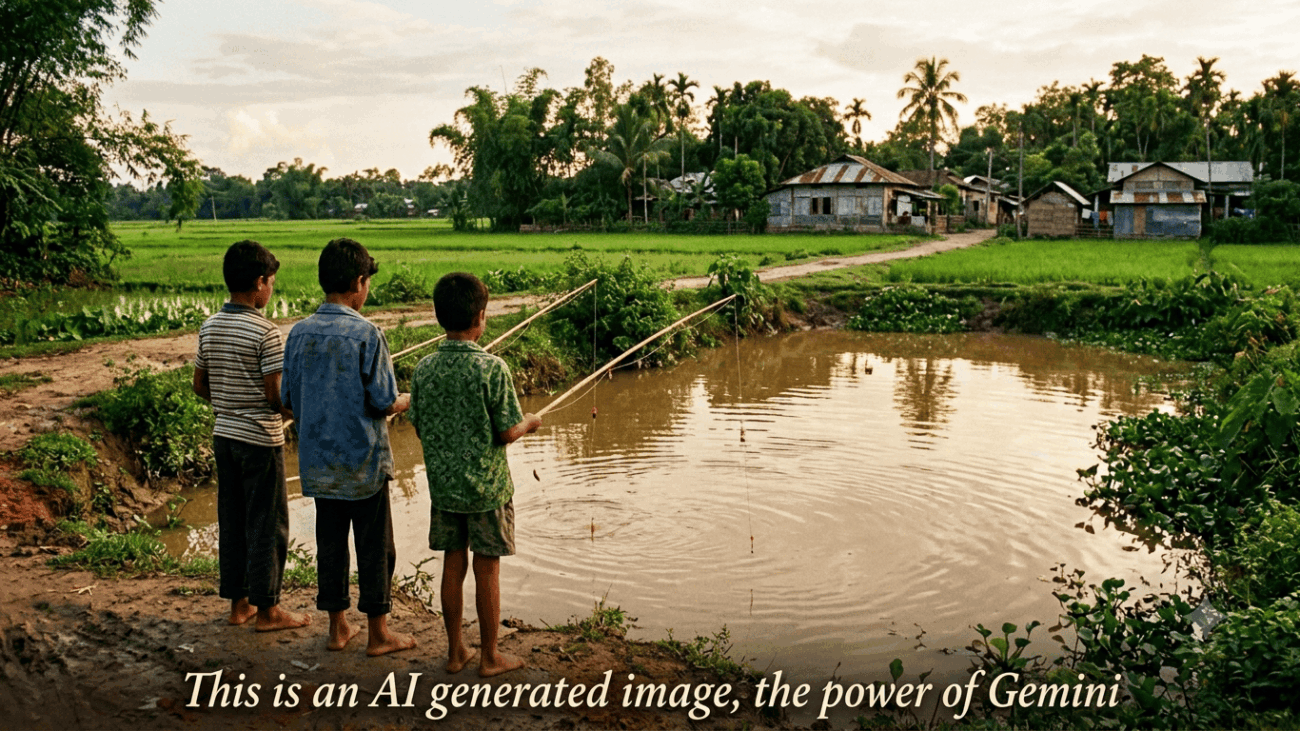
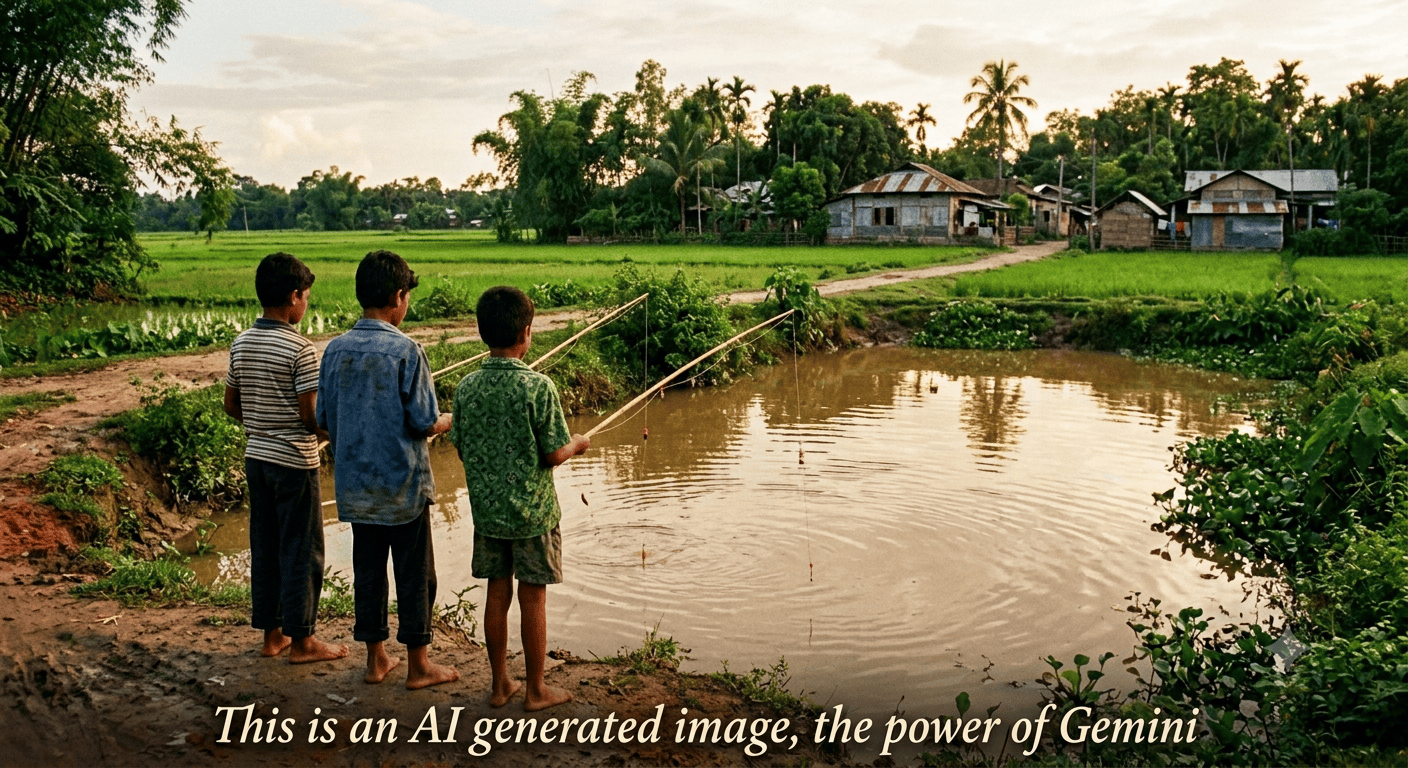
Mindful Whispers: Echoes of Childhood (Part 1: The Golden Pond — Catching Life’s Greatest Lessons in Moran )

Let me tell you a story, how I was Anchored by the Water, the patience of my Childhood Shaped My Present Peace. The days of the Golden Evenings, Red Soil, Muddy Water, the Fresh Air was the strength I gathered in my Youth.

There is a quiet, sacred magic in looking back, in realizing that the small, fleeting moments of our youth were quietly weaving the fabric of the people we would become. As I stand here today, looking over the horizon, the years seem to melt away, leaving behind the vivid, beating heart of my childhood in Moran, Assam.

The sun used to hang low over those endless, emerald gardens, towering trees, the bamboo grooves, casting a liquid gold hue across the fields where I loved to roam. I can still vividly picture standing at the edge of the familiar village pond, its surface shimmering like a thousand scattered diamonds under the warm, humid sky. Memories flood back, pulling me irresistibly into that untamed joy. Oh, how I miss those golden evenings after school, the electric, sweet freedom that hit the moment the final bell rang.

With my makeshift fishing rod, a slender, springy bamboo branch tied with a simple length of string and a hook, after reaching home, I would race down the red-dirt path, my heart hammering a frantic rhythm against my ribs. As I reached the water’s edge, the air thick with the earthy scent of damp soil and the distant calls of egrets settling into the bamboo groves, the world became my own secret kingdom. My friends are already there.

I’d cast my line and wait. At first, there would be just a tentative, ghost-like brush against the string. My breath would hitch, every muscle locking into absolute, breathless stillness. Then, Wham! A violent, electric tug would nearly wrench the bamboo branch from my sweaty palms. A wild local puthi or a feisty kawoi had taken the bait. The string would cut a frantic, zig-zagging scar across the pond’s surface, sending shockwaves of pure adrenaline straight up my arms. With a breathless, triumphant heave, I’d whip the rod upward, sending a shimmering, silvery flash arching through the golden air. In that split second, the universe narrowed down to just me, the struggling catch, and the roaring triumph in my chest.

And then there were the rainy days, when the monsoon rains drummed a steady, comforting rhythm against the corrugated tin roofs of our village, turning the lush green gardens, fields into a vibrant, mist-veiled labyrinth. During those sudden downpours, I would sit on the veranda of our ancestral home, watching the swollen raindrops pitter-patter into the muddy puddles of the courtyard. Even when the rain kept me from my favorite fishing spots, it offered a cozy warmth: the distant chatter of neighbors sheltering beneath woven cane japi umbrellas, and the quiet contemplation of nature resting. The wait for rain seemed as eternity and in somedays we just went drenching in the rain, without the knowledge of our parents.

Back then, I thought I was just passing time, dodging the weight of school expectations. But the traits I absorbed by that water’s edge quietly shaped the very foundation of who I am today.

Now, when life calls me back to my daily responsibilities, whether it’s watering my thirsty garden plants or heading out with a sickle to cut fresh, sweet grass for our cows, I carry those childhood lessons with me:

  • Patience : Waiting hours for a bite taught me that life unfolds on its own schedule.
  • Perseverance: Tending to my plants today reminds me that growth cannot be rushed; it takes quiet, daily dedication.
  • Living in the Present: The intense focus required to watch that bobber taught me a grounding mindfulness. It allows me to find peace even in repetitive daily chores.
  • Harmony with Nature: Respecting the natural rhythm of the pond translated into a deep reverence for the land, guiding how I nurture my garden and care for our animals today.
  • Finding Joy in Simplicity: A simple bamboo branch, a piece of string, and a quiet afternoon were all I needed for complete happiness. It taught me early on that true fulfillment comes from within, not from material abundance.

Looking back, my heart swells with a profound sense of gratitude. I am deeply thankful to my parents, whose quiet wisdom, warm home, and unconditional love gave me the freedom to explore, dream, and grow. And to my childhood friends, my partners in crime who shared those muddy paths, the laughter under the monsoon rains, and the unbridled thrill of every catch, thank you for making my youth a canvas of unforgettable joy. I am who I am today because of the roots we planted together in that rich Assam soil.

A Closing Prayer & Gratitude

JT

The Billionaire Who Refused to Breathe Wall Street’s Air

In his book Give and Take, Adam Grant writes about the rare individuals who see the world through a fundamentally different lens than the rest of us. When I look at the financial markets today, I realize that true market icons operate on a similar frequency. They don’t just process data differently; they possess a level of psychological clarity that borderlines on audacity.

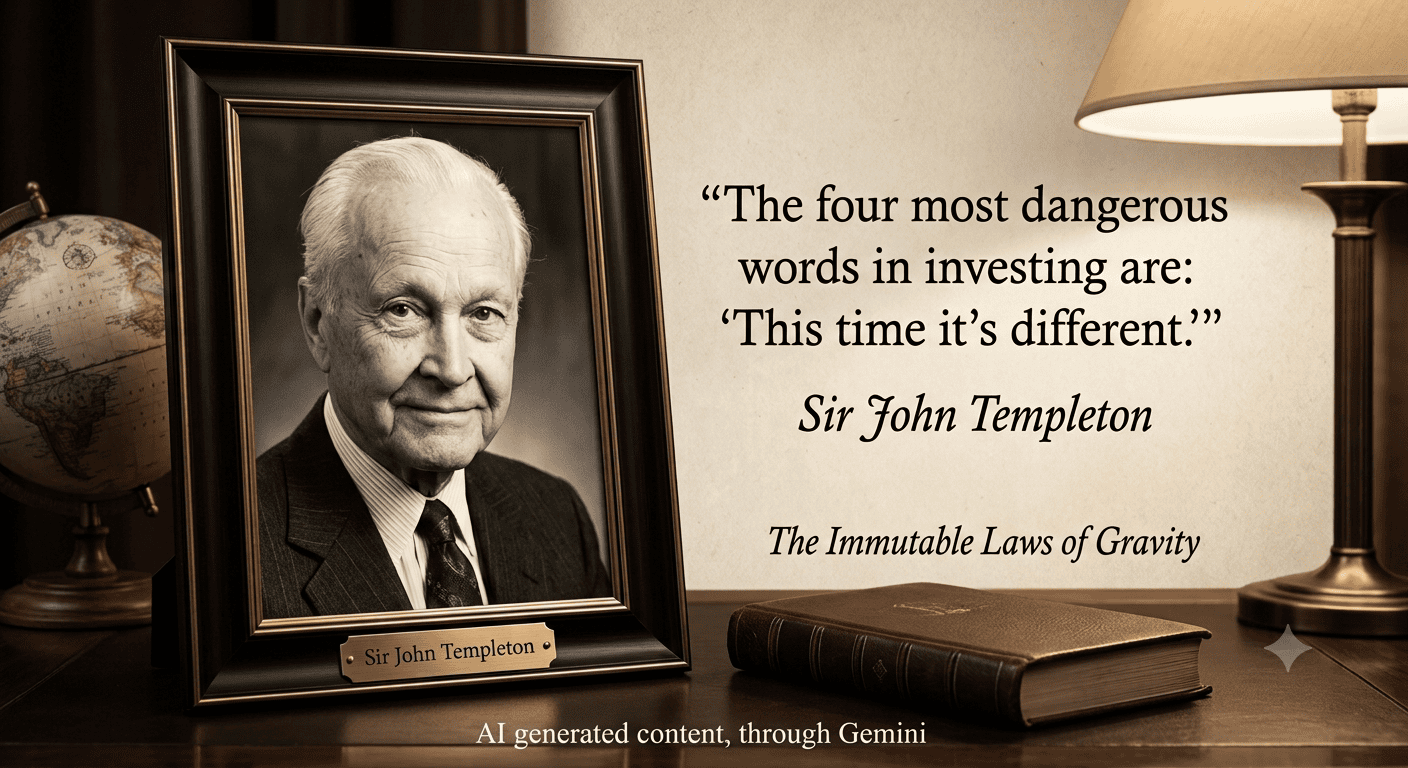
By the year 2000, Sir John Templeton had absolutely nothing left to prove. He was 87 years old, absurdly wealthy, living comfortably in the Bahamas, and fully dedicated to funding scientific and spiritual research. He had won the game.

Yet, as the Dotcom bubble swelled to its absolute, intoxicating zenith, Templeton stepped back onto the field.

Not for greed. But because the truth mattered.

While Wall Street was drunk on the narrative that “earnings no longer applied” and tech companies with zero revenue were being valued at astronomical multiples, Templeton saw a familiar ghost returning to the room: unadulterated mass delusion.

To understand why an 87-year-old came out of retirement, you have to understand the mental model he lived by. Templeton famously built his legacy on buying at the “point of maximum pessimism.” But in the year 2000, he found himself staring at the exact opposite: the point of maximum euphoria.

He possessed three distinct character traits that made it impossible for him to stay on the sidelines:

  • Absolute Skepticism Amidst Mass Hype: He wasn’t swayed by shiny new narratives. When optimism became detached from fundamental reality, his inner alarm bells rang so loudly he couldn’t ignore them.
  • Refusal to Accept Waste: Templeton loathed overpayment. Watching companies with zero business foundation trade for billions was an affront to economic truth.
  • An Eye for Human Patterns: He didn’t know how to code, nor did he care to. But after eight decades on Earth, he knew human psychology. He understood that every speculative bubble throughout history always dies the exact same way—under the weight of its own hype.

Templeton didn’t just bet against the market; he dismantled the mechanics of the tech boom to find its fatal, hidden flaw.

When a hot dotcom company went public, founders and venture capitalists were bound by a standard 180-day “lock-up” period, forbidding them from selling their shares. Wall Street viewed this as stability. Templeton put himself in the shoes of those insiders and saw desperation.

He realized these founders weren’t blind. They knew their companies weren’t worth 100 times earnings. They knew the bubble was going to burst, and they were quietly waiting for the exact second they were legally allowed to cash out.

So, Templeton orchestrated a masterclass in precision timing:

  1. He selected 84 of the most egregiously overvalued NASDAQ tech stocks.
  2. He shorted them exactly 11 days before their 180-day lock-up period expired.

The execution was ruthless.

The moment those lock-up windows opened, a massive flood of insider selling hit the market. Founders dumped their shares, supply overwhelmed demand, and stock prices plummeted off a cliff.

By anticipating human nature rather than reacting to chart patterns, Templeton caught the exact inflection point of the crash. As trillions in paper wealth evaporated overnight, the 87-year-old contrarian quietly walked away with $86 million in profit.

Sir John Templeton passed away in 2008 at the age of 95.

His final, brilliant trade proved that true mastery in investing—or in life—isn’t about being the youngest in the room, living near Silicon Valley, or mastering complex algorithms. It is about emotional discipline when the crowd goes mad. It is about having the courage to act when everyone else is blind.

He bought the ruins of World War II at the bottom, and he shorted the Dotcom mania at the top. He reminded us of the ultimate truth every modern investor continually forgets:

Gemini_Generated_Image_wunuefwunuefwunu

The Weight of a Ticket, The Lightness of a Smile

Flights get delayed—it feels like a universal law of travel. You sit, you wait, and you eventually board, bracing yourself for the usual routine. But today had a few extra twists waiting in the wings.

Stepping onto the plane, I noticed a spacious business class cabin up front. Two of my colleagues were already up there, lounging comfortably with plenty of breathing room, leaving four out of the eight seats completely vacant. Maybe today is my lucky day, I thought. After all, I had originally booked an emergency exit row—the holy grail of economy legroom.

But luck decided to test me instead.

Due to a last-minute aircraft change, my seat was reassigned to 15D—one row back, reduced to a thoroughly ordinary, unremarkable middle-of-the-pack seat. Oh well, I sighed to myself. You win some, you lose some.

The Man in 15E

Fate, it turned out, had a very different kind of upgrade in mind for me. Not for my legs, but for my perspective.

I ended up striking up a conversation with the man sitting next to me in 15E. As we talked, he shared a piece of his life that instantly silenced my inner complaints. He had recently been in a horrific accident that left him unconscious for ten days. When he finally woke up, an entire month of his life was simply gone—erased from his memory without a trace.

To pay the crushing medical bills, he was forced to sell his beloved Bullet motorcycle at a massive 60% loss. And now, still recovering, he was flying back to resume his work as a security guard for a private firm in Goa.

What struck me wasn’t just the sheer tragedy of his story; it was him.

As he spoke, he smiled. There was no bitterness in his voice, no anger at the world, not a single drop of negativity. Just pure, unfiltered gratitude for being alive and moving forward. Sitting beside him, my minor annoyance over losing an exit-row seat felt impossibly small. He gave me a humbling reality check, reminding me how much I have to be thankful for.

A Warm Welcome in Delhi

When we landed in Delhi, I was met by a driver assigned to pick me up. It happened to be his very first day with the agency. He was incredibly polite, though he didn’t know the exact location of my guest house—just the major landmark nearby.

As we navigated the traffic, I called my regular guest house manager to sort out the final directions, speaking in Hindi. The driver listened quietly as he drove. Just as we approached the destination, he looked back at me and softly said:

“The way you talk… your Hindi and its warmth will make anyone happy.”

His words stopped me in my tracks. I was genuinely touched by his gentle observation. I told him he had just made my day, but he shook his head with a smile and replied that I had made his first day on the job one he would always remember.

As I signed the duty slip, I handed him a small tip—specifically asking him to treat himself to a good cup of hot tea and snacks after a long drive. Before we parted, I shared a simple thought with him: Always keep smiling, because your smile is the one thing in this world that is entirely under your control.

Reflections on the Journey

Looking back, it was a day of minor setbacks—a delayed flight, a downgraded seat, and lost directions. But it was completely transformed by two incredible human beings: a resilient stranger in seat 15E who lost a month of his life yet kept his joy, and a new driver whose kind words cost nothing but meant everything.

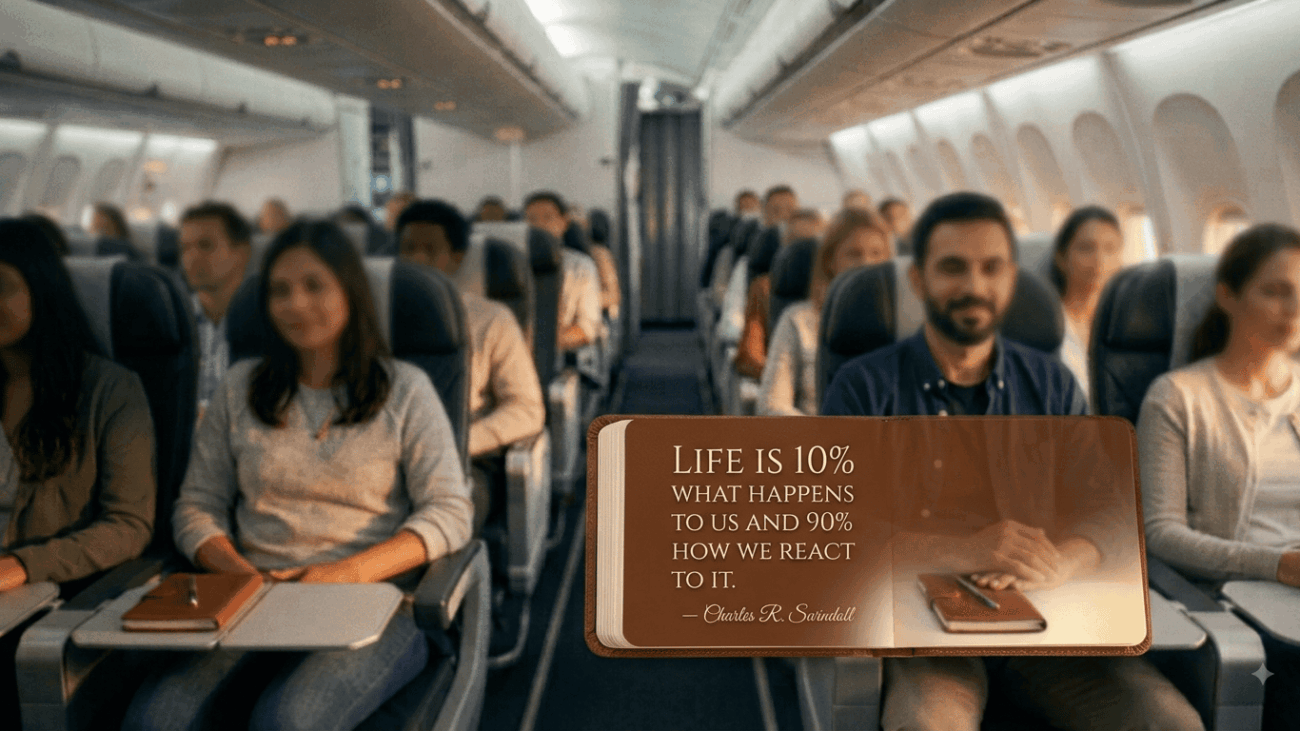
It brought to mind one of my favorite quotes by Charles R. Swindoll:

“Life is 10% what happens to us and 90% how we react to it.”

I walked away from the airport feeling lighter, richer, and deeply grateful. It was a great day indeed.

Gemini_Generated_Image_ngkwkqngkwkqngkw

The Night Dr. Daniel Hale Williams Changed Medicine Forever

The Night a Bold Surgeon Rewrote Medical History. In 1893, Dr. Daniel Hale Williams risked everything to perform a historic, “impossible” heart surgery under the gaze of six witnessing doctors. Read the incredible true story.

On a humid summer night in Chicago, 1893, a man named James Cornish was rushed to Provident Hospital, clinging to life after a knife wound to the chest.

In those days, a stab wound to the heart was an absolute death sentence. The prevailing medical wisdom of the 19th century was absolute: the human heart was a sacred, untouchable border. To operate on a beating heart was considered impossible, and any surgeon daring enough to try would be accused of malpractice.

But the doctor on duty that night was no ordinary physician. His name was Dr. Daniel Hale Williams.

Dr. Williams had already defied the odds just by existing in his field. As a Black surgeon in an era of rampant racial prejudice, he had recently founded Provident Hospital—the country’s first medical facility with an interracial staff—to ensure patients of all colors could receive dignified care.

Knowing the immense skepticism he faced as a Black professional, Dr. Williams did something extraordinary before picking up his scalpel: he pulled six other doctors—four white and two Black—into the cramped operating room. They weren’t there to assist. They were there to be witnesses. If the patient died, they would prove he followed protocol; if the patient lived, they would validate a miracle.

With the six doctors watching in hushed silence, Dr. Williams opened the chest cavity. He found a severed artery and a deep, angry tear in the pericardium—the protective sac surrounding the heart.

Relying on sheer instinct, immaculate skill, and without the modern luxury of antibiotics or blood transfusions, Dr. Williams did the unthinkable. He reached in, held the wounded tissue, and carefully sutured the tear just inches away from the rhythmically thumping heart.

Fifty-one days later, James Cornish didn’t just survive—he walked out of the hospital on his own two feet. He would go on to live for another twenty years.

Dr. Daniel Hale Williams didn’t just save a life that night; he shattered a medical barrier that had stood for centuries. His story is a powerful reminder of what happens when profound skill meets the audacity to hope, proving that true pioneers are those who look at an “impossible” boundary and choose to cross it anyway.

image_18f9faba

How Our Mind Makes Choices

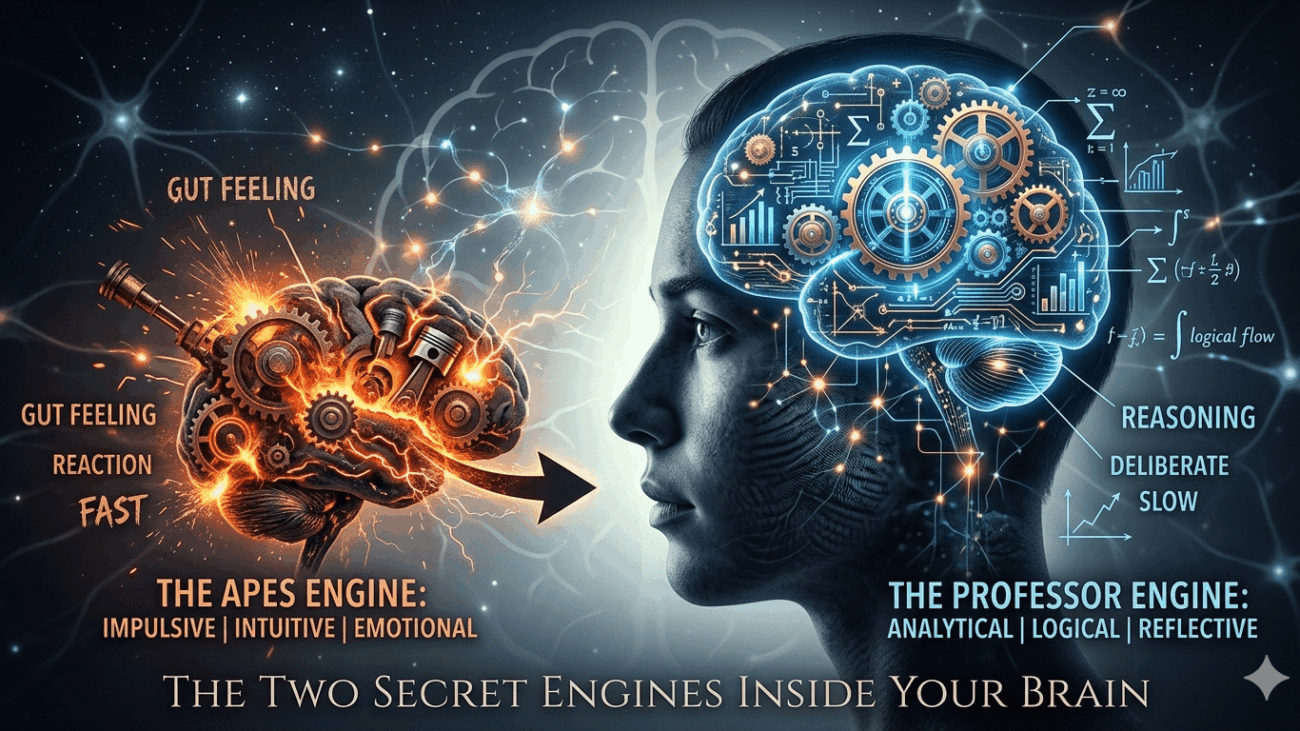
The Two Secret Engines Inside Your Brain:

We like to think we are always smart and logical with our money. We imagine our minds as calm, careful courtrooms where every purchase or life choice is weighed with perfect precision.

But let’s be honest. Have you ever gone to the market with a strict budget, got overwhelmed by the crowds, and ended up buying things you didn’t need just because they looked flashy?

Psychologist Daniel Kahneman won a Nobel Prize for explaining exactly why we do this. He revealed that your brain does not have just one way of thinking. Instead, it relies on two completely different internal engines to get you through the day: System 1 (The Autopilot) and System 2 (The Detective).

“System 1 runs automatically and System 2 is normally in a comfortable low-effort mode, in which only a fraction of its capacity is engaged.”Daniel Kahneman

“System 2 is activated when an event is detected that violates the model of the world that System 1 maintains.”Daniel Kahneman

Understanding these two systems is the secret to knowing why we make impulsive mistakes, how shops trick us, and why technology is changing our choices forever.

Let’s meet our Brain’s 2 Engines

🧠 The Fast Autopilot or System 1

System 1 operates automatically, instantly, and completely behind the scenes. It requires zero conscious effort or energy. It runs on gut instinct, emotions, habits, and quick mental shortcuts. System 1 is our brain’s survival mode.

Some easy examples of this mode are, we slam on our car brakes when a dog runs into the road, we can instantly recognize an angry face, immediately tell that 2+2=4. It is incredibly fast, but the major flaw is that as it is highly impulsive it can be easily tricked by illusions or clever advertisements.

🕵️‍♂️ The Slow Detective or System 2

System 2 is our conscious, deliberate, and logical mind. It handles the heavy lifting, like complex math, deep analysis, and self-control. It is the part of your brain that ‘you actually think of as “you.”

When do we use System 2, we use it when we try to calculate something difficult in our head, or search carefully for a specific address in an unfamiliar neighbourhood. But the major weakness of System 2 is that it is fundamentally lazy. Our brain burns a massive amount of energy when System 2 is working hard. Hence, to save energy, our brain constantly tries to shut the Detective down and moves towards the Autopilot mode.

The Retail Trap: Why Your Detective Goes to Sleep

Because your brain treats System 2 like a scarce battery, you navigate almost 90% of your daily life using the fast shortcuts of the System 1 Autopilot. Supermarkets and online stores understand this biology perfectly. They design crowded, noisy, and bright environments specifically to exhaust your Detective and exploit your Autopilot.

“Nothing in life is as important as you think it is, while you are thinking about it.”Daniel Kahneman

Imagine walking into a chaotic festive market. You start with a great System 2 plan: you will compare prices, check labels, and stick strictly to your budget.

But within half an hour, your mental battery drains. The bright neon signs, loud music, pushy salespeople, and endless choices force your brain to do too much work. Your logical Detective gets exhausted and falls asleep.

Suddenly, your Autopilot takes the wheel. You see a flashy red “Special Deal!” sign on a luxury item you don’t even need. Instead of doing the math, your Autopilot sees the bright color, gets excited, and throws it into the bag. You didn’t make a smart, rational choice; your tired brain simply took the easiest route out.

The Future: AI as a Tireless Detective

This biological reality is why humans can never be perfectly logical all the time. Our brains simply run out of battery. This is exactly where the rise of Artificial Intelligence changes everything.

An advanced AI assistant is essentially a permanent, tireless version of System 2. It has infinite energy, never runs out of fuel, and completely lacks a flawed, emotional Autopilot.

By letting software handle our budgets, compare prices, and manage our shopping, we are replacing our exhausted human Autopilot with a sleepless digital Detective. We might finally achieve perfect financial efficiency—not by fixing our broken human logic, but by handing our choices over to a machine that never needs to sleep.

image_582d5dbd

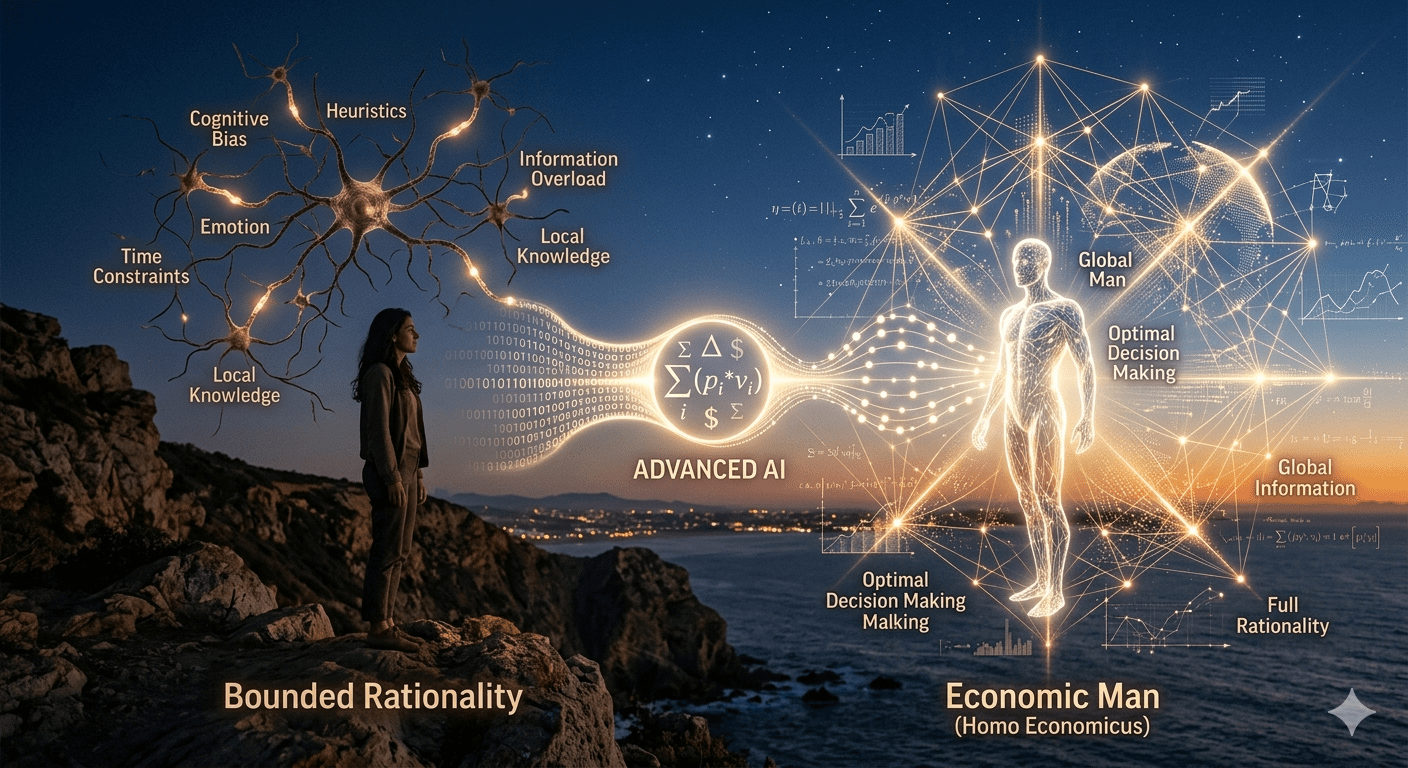
Why AI can finally turn humans into ‘Economic Man’ from ‘Bounded Rationals’

“The algorithm forces us to act with flawless logic, but it does so by wiping away the beautiful, messy spontaneity that makes us human.”

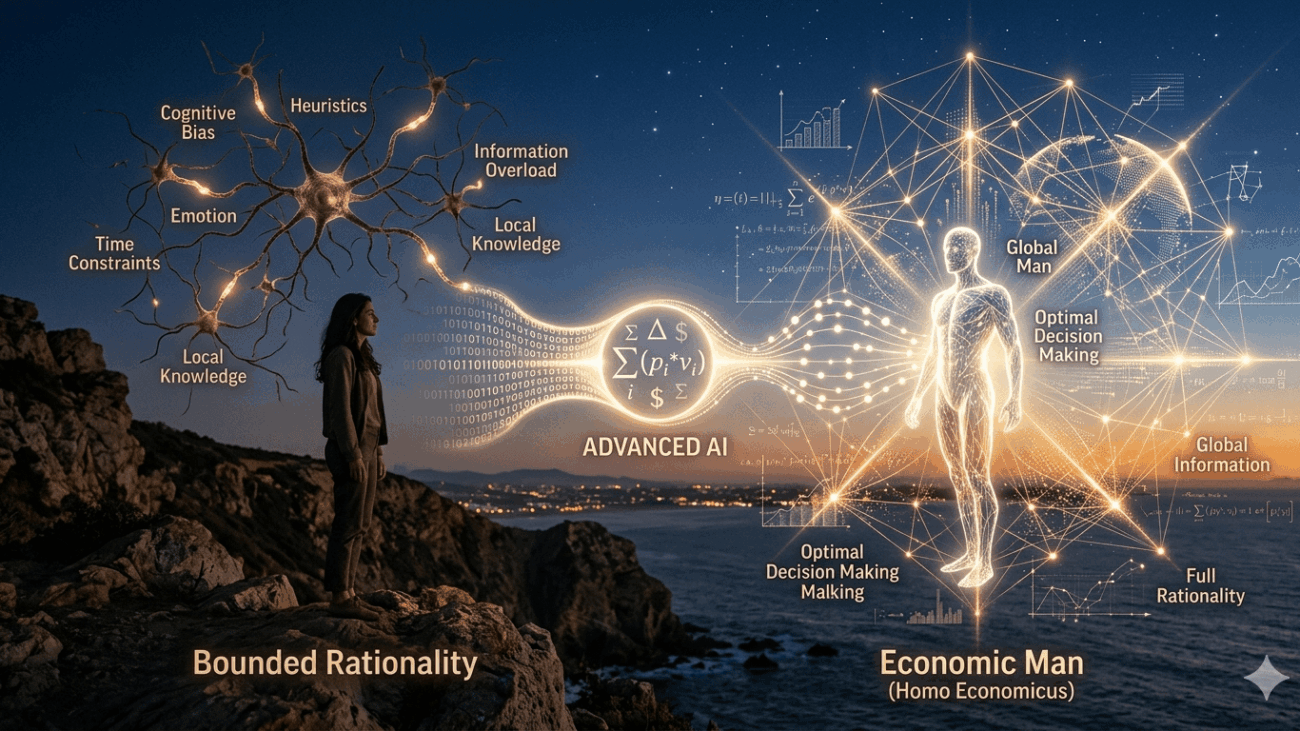
AI can finally turn humans into ‘Economic Man’ from our current state of ‘Bounded Rational’ players by acting as an automated, hyper-logical proxy that removes the biological limits of our brains. By managing our daily transactions, AI can strip away the three constraints that Herbert Simon identified in his theory of Bounded Rationality.

Human Logic has 3 boundaries, a) Limited Brainpower b) Missing Market Data and c) Panic, Fast Timing leading to bounded decision making. However, with the advent of AI, we humans will have all the Real Time Information for Infinite Computation and Instantaneous Execution leading to purely rational decision making which will make us strive towards the ‘Economic Man’.

Let us how dive a bit deeper.

1. Erasing the Information Gap

Real humans cannot know every price, tariff, or shipping fee on earth. We buy based on trust, guesswork, or whatever shop happens to be nearby. As such the classical “Economic Man” fails to exist.

An AI agent does not guess. It uses automated web scraping and instant data feeds to track the entire global economy at once.

The Difference in Action: Buying a High-End Laptop

The Bounded Human: You visit a couple of electronics stores or check one major online retailer. You get overwhelmed by technical jargon, worry about warranty terms, and just make a best guess.

The AI “Economic Man”: In milliseconds, your AI scans thousands of global suppliers, compares import duties across borders, calculates local delivery delays to Assam, and tracks historic price drops. It instantly secures the absolute best deal on earth, completely bypassing human information blindness.

2. Eliminating Choice Fatigue

Human brains get tired. When we are flooded with too many options, coupons, and combinations, our mental processors overheat. We experience “choice overload” and make impulsive decisions just to get the shopping over with.

An AI agent never gets tired, never feels stressed, and doesn’t care about flashy packaging. It operates purely on cold, hard math.

Let’s look into a very common example of booking a Family Trip

The Bounded Human: You look at 10/15 different websites, resort, compare packages, look up hidden resort fees, and try to calculate fuel costs. After an hour of staring at a screen, your brain gives up. You pick a mid-range hotel with nice pictures and say, “This is fine.” You didn’t get the best deal; you just stopped because your brain was exhausted.

The AI “Economic Man”: Your AI assistant evaluates millions of combinations of room availability, vehicle wear-and-tear, and seasonal price dips in less than a second. It is completely immune to clever marketing tricks, beautiful website designs, or emotional manipulation. It picks the mathematically perfect option without a single ounce of mental fatigue.

Here, AI with its upgraded ‘Processing Power’ operates rationally, no brand loyalty or nostalgia like human brains, completely immune to clever marketing tricks, visual packaging, or emotional manipulation, cognitive bias and provides option.

3. Eradicating Time Constraints

We, Humans are bound by the clock. In the real world, time runs out, traffic rushes by, and deadlines approach. When we are forced to make decisions in a panic, our logic completely breaks down.

An AI agent operates at computational speeds. It doesn’t experience panic, wait in traffic, or rush because a deadline is looming. It acts instantly and flawlessly, even while you sleep.

Booking a Ride in Rush Hour

The Bounded Human: Imagine you are standing at the crowded rotary during evening rush hour. It is getting dark, buses are honking, and you need to get to the location for an urgent meeting. You open a ride-hailing app, see a high surge price, and feel your stress rising. Because you don’t have 15/20 minutes to stand on the road comparing different apps, checking alternative routes, or waiting out the surge, you panic-click “Book.” Chances are there that you made a terrible financial deal simply because the clock ran out.

The AI “Economic Man”: Your personal AI assistant predicts the traffic surge before you even leave your building. It monitors changing traffic patterns, evaluates public transit delays, and micro-negotiates with independent ride-pooling systems across multiple platforms simultaneously. It books the most efficient route at the absolute lowest cost in a split second. You get moving without ever experiencing a single moment of time-pressured panic.

The Paradox: Are We Rational, or Just Bystanders?

While AI gives us the perfect choices of the “Economic Man,” it leaves us with a quiet riddle: if a machine does our thinking, are we truly the rational ones?

By giving our choices away to software, our minds do not suddenly grow into supercomputers. We simply let go of the steering wheel. The algorithm forces us to act with flawless, cold logic, but it does so by wiping away the beautiful, messy, and unpredictable sparks that make us human.

Herbert Simon showed us that human flaws have their own poetry—we choose warmth over math, and “good enough” over perfection. Now, as silent AI agents take control of our choices, the textbook phantom of perfect logic finally comes to life. We will finally achieve the flawless efficiency we always chased. But we must ask ourselves: are we elevating our minds, or are we trading our human soul for a perfect calculation?

image_586cf34e

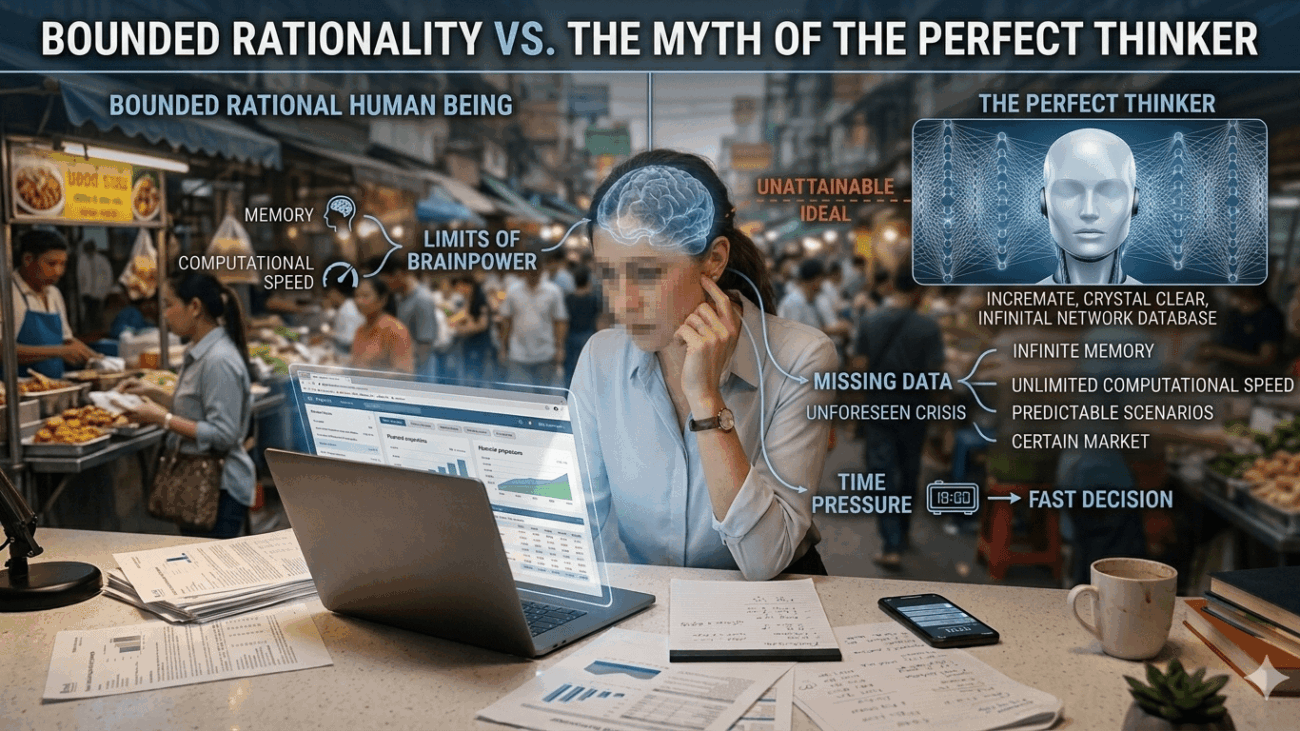
The Myth of the Perfect Thinker: Why You are a “Bounded Rational” Human Being?

We like to think we make flawless financial choices. We imagine ourselves weighing every option, calculating every discount, and picking the absolute best deal, i.e the perfectly logical creature of economics textbooks, the “Economic Man.”

But let’s be honest. Have you ever walked into a market, completely overwhelmed by the noise, the traffic, and thirty different vendors yelling out prices for the same bananas, and just bought from the first stall/ vendor you saw? If you have, they you are a normal human being, congrats.

A brilliant thinker named Herbert Simon looked at how humans actually make choices. He researched extensively and came to the concuslion that we, humans are not supercomputers. We as humans, normally weighing the options, not every available option; calculating discounts, not every discount, and then picking up the best deal as we presume, which may not be the best, but we are satisfied and make the purchase/ deal.

Simon first laid out the core idea that human decision-making is limited by cognitive capacity and organizational constraints, challenging the classical economics assumption of perfect rationality. He then introduced the foundational concept of Bounded Rationality in his landmark 1947 book, Administrative Behavior.

Simon argued that human rationality is “bounded” (or limited) by three major things: the limited information we have, the limited processing power of our brains, and the limited time available to make a decision.

Instead of searching forever for the perfect choice, humans practice what Simon called “satisficing”—a combination of satisfying and sufficing. We choose the option that is simply “good enough.”

Let us discuss Bounded Rationality in more simpler terms.

1. The Boundary of Information (We Can’t Know Everything)

The “Economic Man” knows the exact price and quality of every product everywhere. In reality, we operate in a fog.

Imagine you are shopping for a Muga Silk Mekhela Chador for a wedding. To be a purely economic thinker, you would need to visit every single weaver in Sualkuchi, check every shop in Fancy Bazar, and test the exact chemical purity of the silk threads in a lab. Because you cannot possibly access or process that much data, you rely on trust. You buy from a shop your aunt recommended, hoping the quality is good and the price is fair. Your decision is rational, but it is bounded by the information you have.

2. The Boundary of Brainpower (Our Brains Get Tired)

Our brains cannot calculate complex mathematical probabilities on the fly. When faced with too many choices, our mental processors overheat.

Think about booking a holiday trip to Kaziranga National Park. You are flooded with choices: dozens of resorts, varying jeep safari packages, hidden resort fees, and fluctuating fuel costs. A supercomputer would calculate the exact utility-to-cost ratio of every single combination. Your human brain, however, experiences “choice overload.” After scrolling through three travel websites, you get tired, pick a mid-range resort with decent photos, and say, “This looks fine.” You didn’t find the absolute best mathematical deal, but you found one that satisfies your basic needs.

3. The Boundary of Time (The Clock is Ticking)

In textbooks, decisions happen in a vacuum. In the real world, time runs out.

Imagine the chaotic rush hour at the Jalukbari rotary in Guwahati. You need to get to Khanapara quickly. To be purely rational, you should pull over, analyze live satellite traffic data for three different routes, calculate the wear-and-tear cost on your vehicle per minute of idling, and check real-time fuel prices. But you don’t have twenty minutes to sit and calculate. The bus behind you is honking, cars are cutting you off, and you are already late. You make a split-second decision based on your gut instinct and take the bypass. It might not be the mathematically perfect route, but it gets you moving.

The Beauty of Being “Good Enough”

Herbert Simon’s concept of bounded rationality changes how we view ourselves. It proves that when we make “impulsive” or “imperfect” choices, we are not necessarily being stupid or lazy. We are simply adapting to a complex world with limited cognitive resources.

The “Economic Man” is a lonely, robotic fiction. He spends his entire life calculating, never experiencing the joy of a spontaneous purchase or the comfort of a trusted local vendor.

By accepting our bounded rationality, we realize that human survival doesn’t require us to be perfect. In a world full of infinite data and chaotic markets, being “good enough” is actually the smartest choice we can make.

image_6eee9c7f

Meet “Economic Man”: The Superhero of Pure Logic

Imagine a person who never tips out of kindness, never buys a brand just because it looks cool, and knows the exact price of fish in every single market across instantly. In economics, this imaginary character is called the “Economic Man” (or Homo economicus).

The idea was first shaped by philosopher John Stuart Mill in 1836. He wanted a simple baseline to understand how humans make financial choices. He knew real people are complex, but he created an idealized, perfectly logical character to make economic math easier.

To understand how this character thinks, let’s look at his Three Golden Rules, using everyday examples from Assam.

The 3 Rules of the “Economic Man”

1. Perfect Self-Interest

An Economic Man only cares about maximizing his own wealth, comfort, and well-being. He is entirely unaffected by emotions, peer pressure, or charity.

Imagine it is Bhogali Bihu season. A regular person might buy Doi (Curd) or Chira (flattened rice) from a local neighborhood vendor just to support a regular family business. An Economic Man would never do this. If a big supermarket chain three kilometers away sells the exact same Doi or Chira for ₹2 cheaper, he will buy it there without a single thought about community support or festive emotion.

2. Perfect Information

This character instantly knows everything about the market. There are no secrets, surprises, or hidden costs for him.

Suppose you want to buy a traditional Muga Silk Mekhela Chador. A normal buyer visits two or three shops in Sualkuchi or Guwahati, compares prices, and makes a best guess. The Economic Man instantly knows the exact thread count, history, production cost, and price of every single Mekhela Chador available across the entire state of Assam. He cannot be tricked by a salesman and never suffers from buyer’s remorse.

3. Perfect Logic (Rationality)

His brain operates like a supercomputer. He calculates the exact costs and benefits of every decision instantly to get the highest reward for the lowest effort.

Think about a daily commute from Jalukbari to Khanapara in Guwahati. A regular commuter might choose a bus based on habit, or take a bike because they enjoy the breeze. The Economic Man calculates the exact fuel consumption, wear-and-tear cost per kilometer, travel time down to the second, and the monetary value of his energy spent. He will mathematically pick the option that gives him the absolute maximum financial and physical return for the lowest possible cost.

Why Does This Model Matter?

Real people do not act like this. We buy sweets for our neighbors during festivals, we make impulsive purchases, and we often lack full information about what we are buying.

However, economists still use the “Economic Man” as a baseline model. By studying how a perfectly logical superhero should behave, it becomes much easier to predict, analyze, and understand how real people actually make financial choices in the real world.

So, as humans are we ‘Economic Man’ or something else. Just hold on for some time, we will dwell further a bit later…

IMG_9605

“Panch Prayag” –  The Himalayan Lesson – 2

After the visual spectacle of Devprayag, the road stretches out toward Srinagar, winding deeper into the heart of the mountains. This stretch isn’t just about the miles; it’s about the soul of the hills found in the simplest of places.

Leaving the confluence behind, we pulled over at a modest roadside dhaba, one of those small roadside hotels that looks like nothing from the outside and delivers everything on the inside. As it is said that in the mountains, “luxury” is often found in the most unexpected corners. We were greeted by a dhaba owner whose enthusiasm was as infectious as the mountain air.

What struck us first wasn’t the menu, but the spotless cleanliness of the place—a gleaming testament to the pride he took in his small haven. But the true star was the hospitality. There is an unbelievable warmth in the way a Pahadi host serves you; it’s not just a transaction, it’s an invitation into their world.

The meal? A steaming plate of Dal Chawal, simple and soul-satisfying. And the “best part” for any hungry traveller on a long mountain haul—eggs were available! There’s a specific kind of joy in finding a perfectly made omelette to complement your lentils when you’re hundreds of miles into a road trip. It was the kind of meal that fuels both the body and the spirit.

“Hospitality is the smell of fresh dal, a clean wooden bench, and a host who treats you like a long-lost friend.”

With hearts and stomachs full, we continued toward Srinagar. The road here begins to level out slightly as you approach the wide valley of the Alaknanda. The river stays your constant companion, its turquoise waters shimmering in the afternoon sun, guiding you toward the next chapter of the Panch Prayag journey.

Nature had other plans for us, to move away from frustration and be with nature, enjoy, I say it as a test of our patience as in the road towards Rudraprayag we met with road blocks, stoppages which seemed like that the mountains themselves were drawing a boundary.

Srinagar, Garhwal’s Srinagar, finally after the tight, winding drama of the mountain roads, the town opens into a wide, sun-warmed valley that feels almost generous in its flatness. The largest and most developed town in the region, it wears many hats: educational hub, fuel stop, lunch destination, and quiet guardian of some extraordinary spiritual landmarks. The air here is noticeably warmer and the pace noticeably slower.

Near the river’s edge, the Koteshwar Mahadev Temple waits inside a cave, a sacred darkness carved by nature long before anyone thought to build a shrine.

Dhari Devi, the ‘’Guardian Goddess of Uttarakhand’’ and ‘’The Spiritual Sentinel’’ is just 15 kms after crossing Srinagar. This is a highly revered shrine. The Dhari Devi Temple stands watch from an unusual perch, a raised platform in the middle of the Alaknanda River, elevated there after a dam altered the landscape forever. Legend says the idol changes its appearance from a girl to a woman to an old lady throughout the day. It is a powerful spot where you can see the river’s massive force being harnessed by the Alaknanda Hydro Power project.

The drive from Srinagar to Rudraprayag covers just 34 kilometres, but distance means very little in these hills. As Srinagar’s valley fades in the rear-view mirror, the mountains close in gently on either side, like walls of a corridor leading somewhere sacred. The road begins to hug the Alaknanda River more tightly as we heard before we saw around each bend.

Rudraprayag is the Confluence of Legends as it carries mythology, memory, and the ghost of a leopard. Rudraprayag is named after Lord Rudra, the fierce, untamed aspect of Shiva and the town carries that energy quietly but unmistakably.

This is the Second Prayag, the sacred meeting point where the Mandakini River, cold, green and restless from its long descent from the glaciers of Kedarnath, surrenders itself into the arms of the Alaknanda, which arrives with quiet authority from the direction of Badrinath. Standing at the confluence, you can almost see the two rivers resist each other for a moment before becoming one.

And here the road makes a great decision, one route peels away toward Kedarnath and the other continues along the Alaknanda toward Badrinath, tracing the river deeper into the mountains. Standing at this junction I felt at a loss as two sacred paths diverging in the hills, each calling to a different kind of pilgrim.

For me, Rudraprayag holds more than mythology, it holds memory — specifically, the memory of a childhood spent with a book. Long before I ever saw these mountains, I had read them. Jim Corbett’s “The Man-Eating Leopard of Rudraprayag”, his pursuit of a leopard that had terrorized the region for 8 long years , from 1918 to 1926, killing over 125 people and becoming, in its way, as legendary as the rivers it prowled beside. The animal moved like a shadow through these very hills, crossing rope bridges, entering locked homes, outwitting every trap laid for it. Corbett himself wrote of it with a respect bordering on awe. So, for me a childhood dream has become a picture now after four decades…