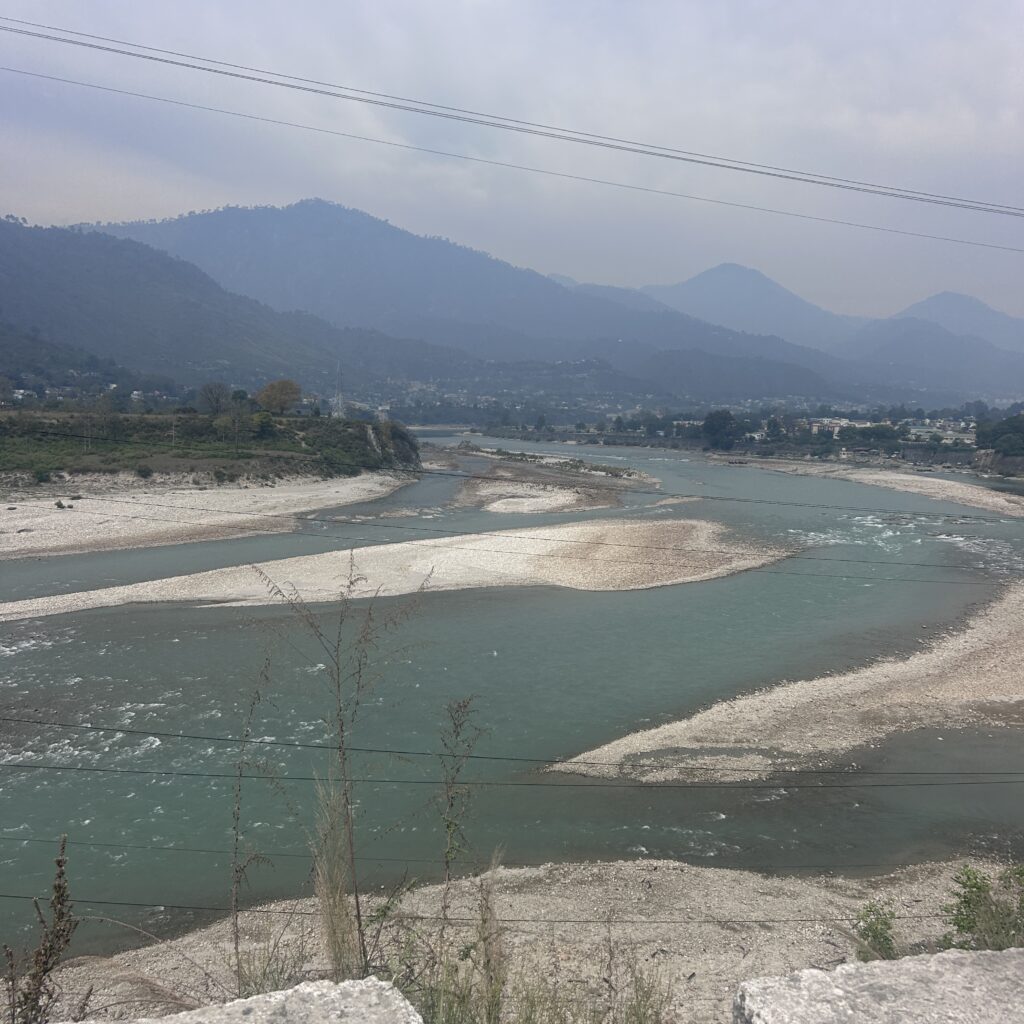
After the visual spectacle of Devprayag, the road stretches out toward Srinagar, winding deeper into the heart of the mountains. This stretch isn’t just about the miles; it’s about the soul of the hills found in the simplest of places.
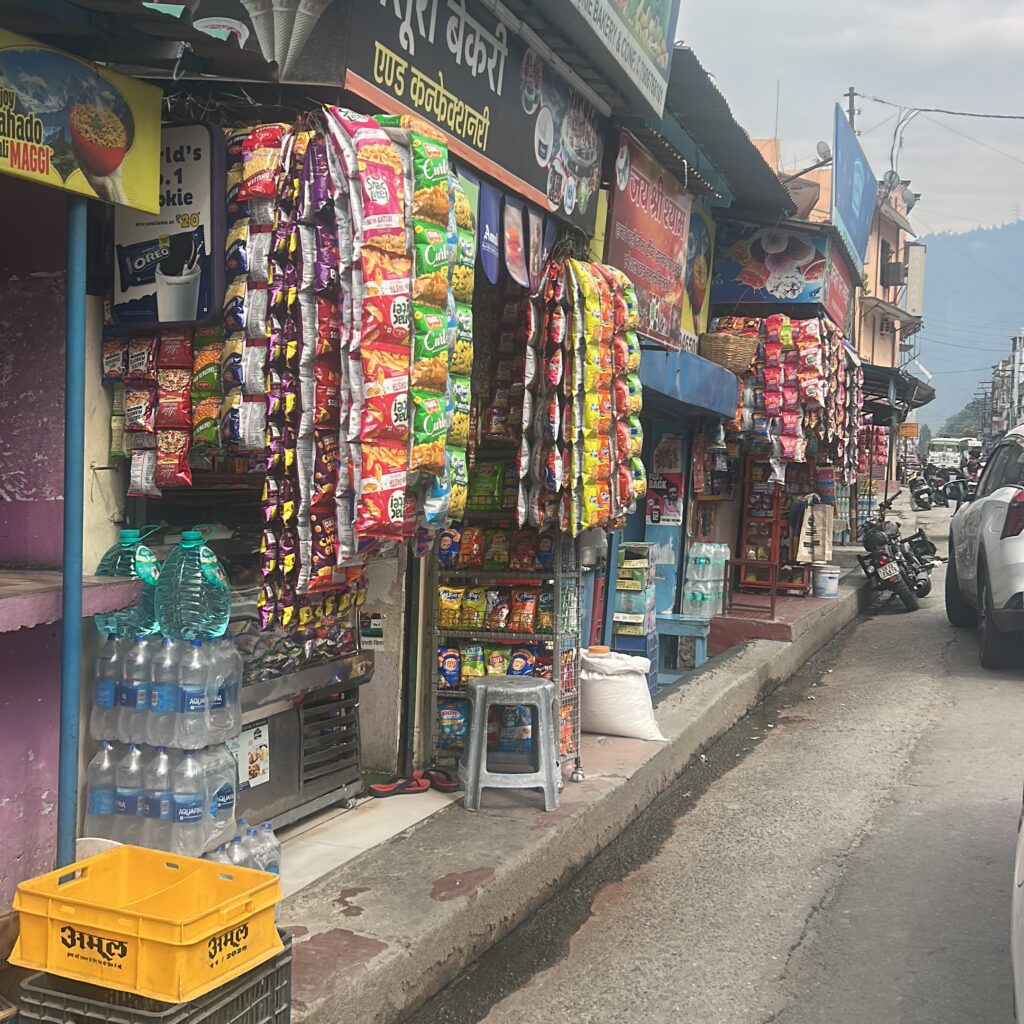
Leaving the confluence behind, we pulled over at a modest roadside dhaba, one of those small roadside hotels that looks like nothing from the outside and delivers everything on the inside. As it is said that in the mountains, “luxury” is often found in the most unexpected corners. We were greeted by a dhaba owner whose enthusiasm was as infectious as the mountain air.
What struck us first wasn’t the menu, but the spotless cleanliness of the place—a gleaming testament to the pride he took in his small haven. But the true star was the hospitality. There is an unbelievable warmth in the way a Pahadi host serves you; it’s not just a transaction, it’s an invitation into their world.
The meal? A steaming plate of Dal Chawal, simple and soul-satisfying. And the “best part” for any hungry traveller on a long mountain haul—eggs were available! There’s a specific kind of joy in finding a perfectly made omelette to complement your lentils when you’re hundreds of miles into a road trip. It was the kind of meal that fuels both the body and the spirit.
“Hospitality is the smell of fresh dal, a clean wooden bench, and a host who treats you like a long-lost friend.”
With hearts and stomachs full, we continued toward Srinagar. The road here begins to level out slightly as you approach the wide valley of the Alaknanda. The river stays your constant companion, its turquoise waters shimmering in the afternoon sun, guiding you toward the next chapter of the Panch Prayag journey.
Nature had other plans for us, to move away from frustration and be with nature, enjoy, I say it as a test of our patience as in the road towards Rudraprayag we met with road blocks, stoppages which seemed like that the mountains themselves were drawing a boundary.
Srinagar, Garhwal’s Srinagar, finally after the tight, winding drama of the mountain roads, the town opens into a wide, sun-warmed valley that feels almost generous in its flatness. The largest and most developed town in the region, it wears many hats: educational hub, fuel stop, lunch destination, and quiet guardian of some extraordinary spiritual landmarks. The air here is noticeably warmer and the pace noticeably slower.
Near the river’s edge, the Koteshwar Mahadev Temple waits inside a cave, a sacred darkness carved by nature long before anyone thought to build a shrine.
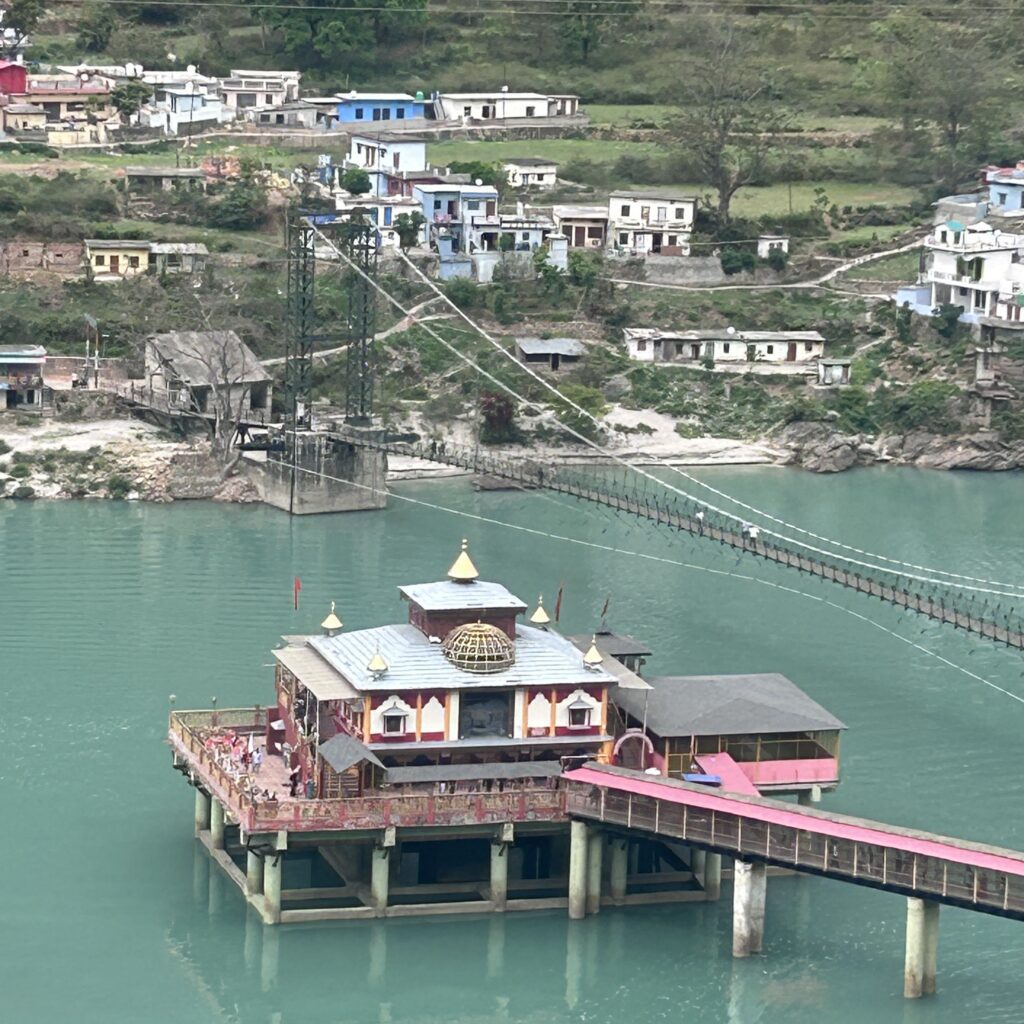
Dhari Devi, the ‘’Guardian Goddess of Uttarakhand’’ and ‘’The Spiritual Sentinel’’ is just 15 kms after crossing Srinagar. This is a highly revered shrine. The Dhari Devi Temple stands watch from an unusual perch, a raised platform in the middle of the Alaknanda River, elevated there after a dam altered the landscape forever. Legend says the idol changes its appearance from a girl to a woman to an old lady throughout the day. It is a powerful spot where you can see the river’s massive force being harnessed by the Alaknanda Hydro Power project.
The drive from Srinagar to Rudraprayag covers just 34 kilometres, but distance means very little in these hills. As Srinagar’s valley fades in the rear-view mirror, the mountains close in gently on either side, like walls of a corridor leading somewhere sacred. The road begins to hug the Alaknanda River more tightly as we heard before we saw around each bend.
Rudraprayag is the Confluence of Legends as it carries mythology, memory, and the ghost of a leopard. Rudraprayag is named after Lord Rudra, the fierce, untamed aspect of Shiva and the town carries that energy quietly but unmistakably.
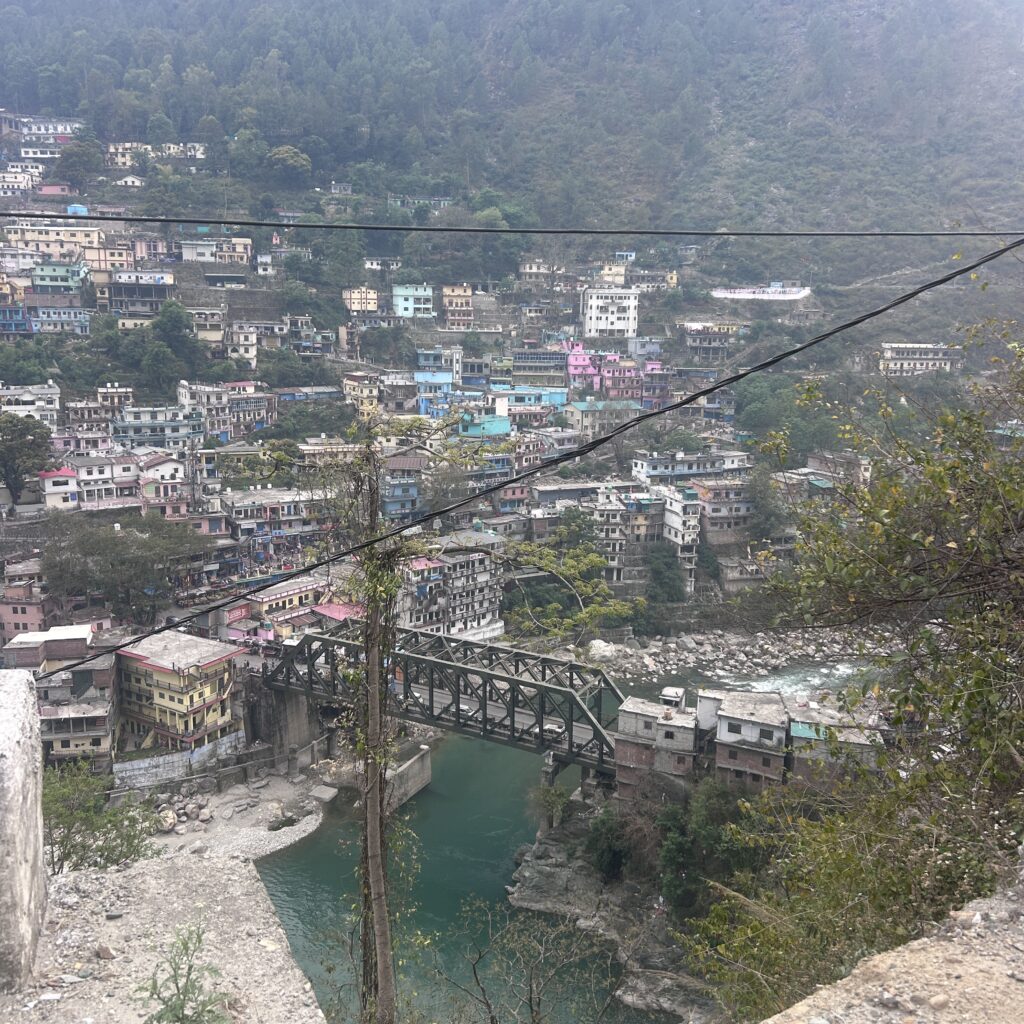
This is the Second Prayag, the sacred meeting point where the Mandakini River, cold, green and restless from its long descent from the glaciers of Kedarnath, surrenders itself into the arms of the Alaknanda, which arrives with quiet authority from the direction of Badrinath. Standing at the confluence, you can almost see the two rivers resist each other for a moment before becoming one.
And here the road makes a great decision, one route peels away toward Kedarnath and the other continues along the Alaknanda toward Badrinath, tracing the river deeper into the mountains. Standing at this junction I felt at a loss as two sacred paths diverging in the hills, each calling to a different kind of pilgrim.
For me, Rudraprayag holds more than mythology, it holds memory — specifically, the memory of a childhood spent with a book. Long before I ever saw these mountains, I had read them. Jim Corbett’s “The Man-Eating Leopard of Rudraprayag”, his pursuit of a leopard that had terrorized the region for 8 long years , from 1918 to 1926, killing over 125 people and becoming, in its way, as legendary as the rivers it prowled beside. The animal moved like a shadow through these very hills, crossing rope bridges, entering locked homes, outwitting every trap laid for it. Corbett himself wrote of it with a respect bordering on awe. So, for me a childhood dream has become a picture now after four decades…