Stories from a Mindful Life
“All grown-ups were once children… but only few of them remember it.” Antoine de Saint-Exupéry
Let me tell you a story, how I was Anchored by the Water, the patience of my Childhood Shaped My Present Peace. The days of the Golden Evenings, Red Soil, Muddy Water, the Fresh Air was the strength I gathered in my Youth.
There is a quiet, sacred magic in looking back, in realizing that the small, fleeting moments of our youth were quietly weaving the fabric of the people we would become. As I stand here today, looking over the horizon, the years seem to melt away, leaving behind the vivid, beating heart of my childhood in Moran, Assam.
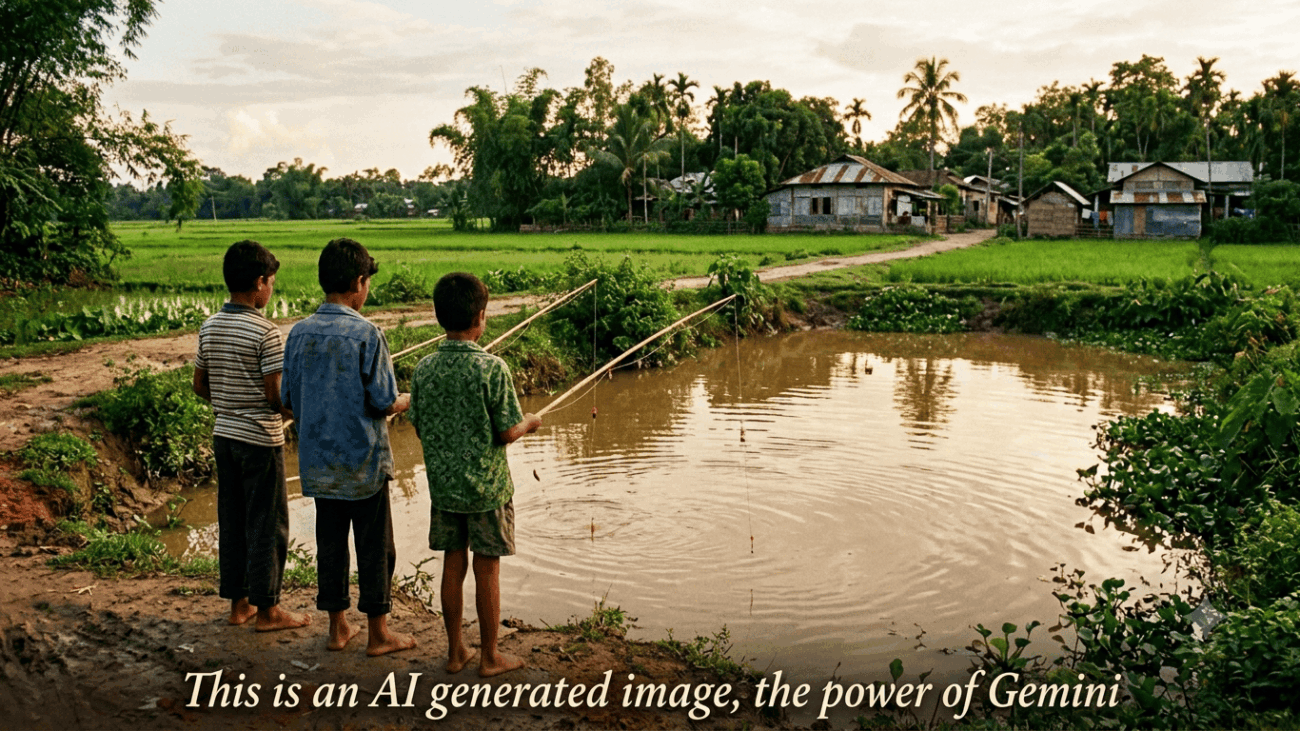
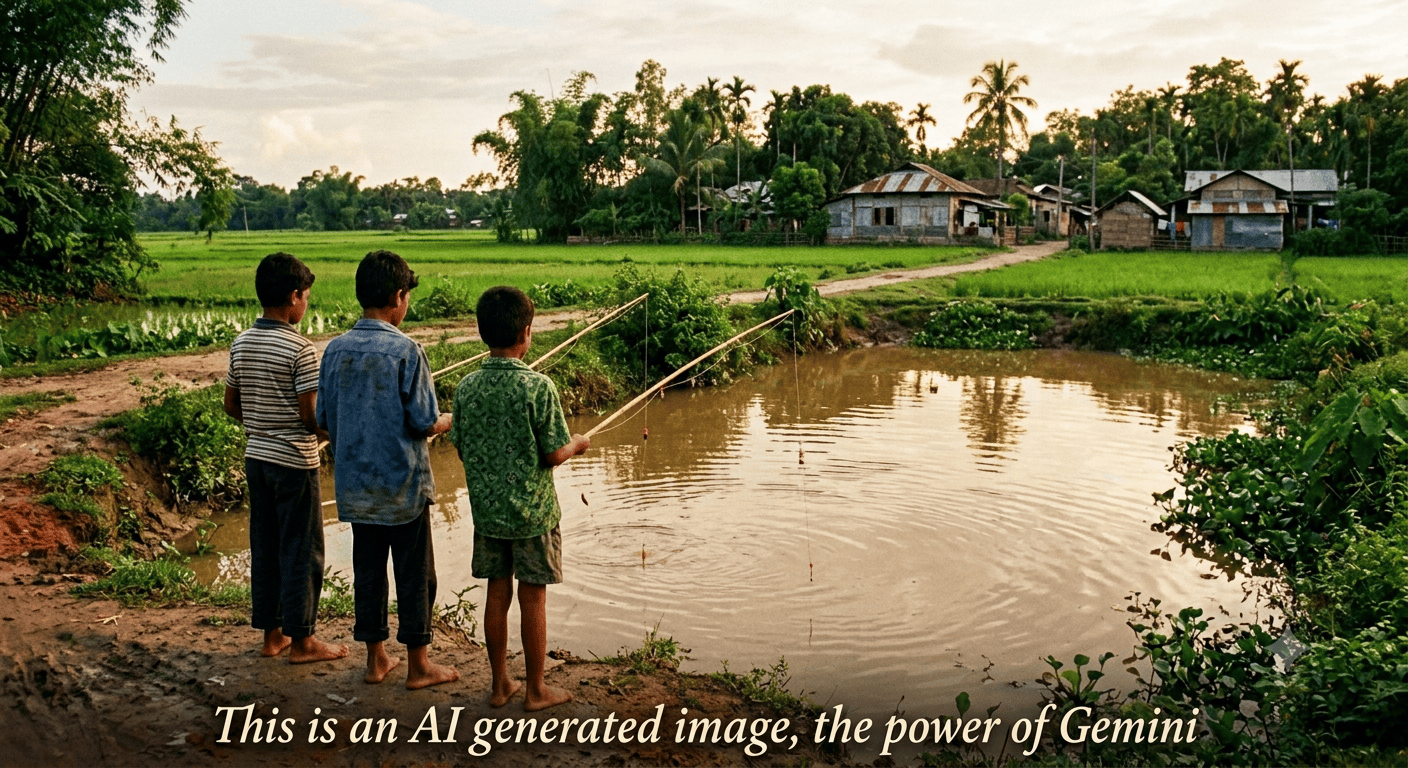
The sun used to hang low over those endless, emerald gardens, towering trees, the bamboo grooves, casting a liquid gold hue across the fields where I loved to roam. I can still vividly picture standing at the edge of the familiar village pond, its surface shimmering like a thousand scattered diamonds under the warm, humid sky. Memories flood back, pulling me irresistibly into that untamed joy. Oh, how I miss those golden evenings after school, the electric, sweet freedom that hit the moment the final bell rang.
With my makeshift fishing rod, a slender, springy bamboo branch tied with a simple length of string and a hook, after reaching home, I would race down the red-dirt path, my heart hammering a frantic rhythm against my ribs. As I reached the water’s edge, the air thick with the earthy scent of damp soil and the distant calls of egrets settling into the bamboo groves, the world became my own secret kingdom. My friends are already there.
I’d cast my line and wait. At first, there would be just a tentative, ghost-like brush against the string. My breath would hitch, every muscle locking into absolute, breathless stillness. Then, Wham! A violent, electric tug would nearly wrench the bamboo branch from my sweaty palms. A wild local puthi or a feisty kawoi had taken the bait. The string would cut a frantic, zig-zagging scar across the pond’s surface, sending shockwaves of pure adrenaline straight up my arms. With a breathless, triumphant heave, I’d whip the rod upward, sending a shimmering, silvery flash arching through the golden air. In that split second, the universe narrowed down to just me, the struggling catch, and the roaring triumph in my chest.
And then there were the rainy days, when the monsoon rains drummed a steady, comforting rhythm against the corrugated tin roofs of our village, turning the lush green gardens, fields into a vibrant, mist-veiled labyrinth. During those sudden downpours, I would sit on the veranda of our ancestral home, watching the swollen raindrops pitter-patter into the muddy puddles of the courtyard. Even when the rain kept me from my favorite fishing spots, it offered a cozy warmth: the distant chatter of neighbors sheltering beneath woven cane japi umbrellas, and the quiet contemplation of nature resting. The wait for rain seemed as eternity and in somedays we just went drenching in the rain, without the knowledge of our parents.
Back then, I thought I was just passing time, dodging the weight of school expectations. But the traits I absorbed by that water’s edge quietly shaped the very foundation of who I am today.
Now, when life calls me back to my daily responsibilities, whether it’s watering my thirsty garden plants or heading out with a sickle to cut fresh, sweet grass for our cows, I carry those childhood lessons with me:
- Patience : Waiting hours for a bite taught me that life unfolds on its own schedule.
- Perseverance: Tending to my plants today reminds me that growth cannot be rushed; it takes quiet, daily dedication.
- Living in the Present: The intense focus required to watch that bobber taught me a grounding mindfulness. It allows me to find peace even in repetitive daily chores.
- Harmony with Nature: Respecting the natural rhythm of the pond translated into a deep reverence for the land, guiding how I nurture my garden and care for our animals today.
- Finding Joy in Simplicity: A simple bamboo branch, a piece of string, and a quiet afternoon were all I needed for complete happiness. It taught me early on that true fulfillment comes from within, not from material abundance.
The patience, perseverance I learned by the pond now guides my hands and heart, keeping me anchored no matter how fast the world moves around me.
Looking back, my heart swells with a profound sense of gratitude. I am deeply thankful to my parents, whose quiet wisdom, warm home, and unconditional love gave me the freedom to explore, dream, and grow. And to my childhood friends, my partners in crime who shared those muddy paths, the laughter under the monsoon rains, and the unbridled thrill of every catch, thank you for making my youth a canvas of unforgettable joy. I am who I am today because of the roots we planted together in that rich Assam soil.
A Closing Prayer & Gratitude
As another chapter of my memory quietly closes, my heart bows in deep reverence to the Divine Almighty, whose silent, guiding hand has written every line of my destiny and shielded me through every storm.
I remain forever indebted to my parents, whose quiet sacrifices laid the foundation of my character, and to the loved ones and friends whose presence made this life journey a beautiful masterpiece.
Thank you for walking down these memory lanes with me. I humbly seek your gentle blessings, prayers, and light as I continue to share the chapters of my life with you.
With devotion, warmth, and gratitude.

