image_18f9faba

How Our Mind Makes Choices

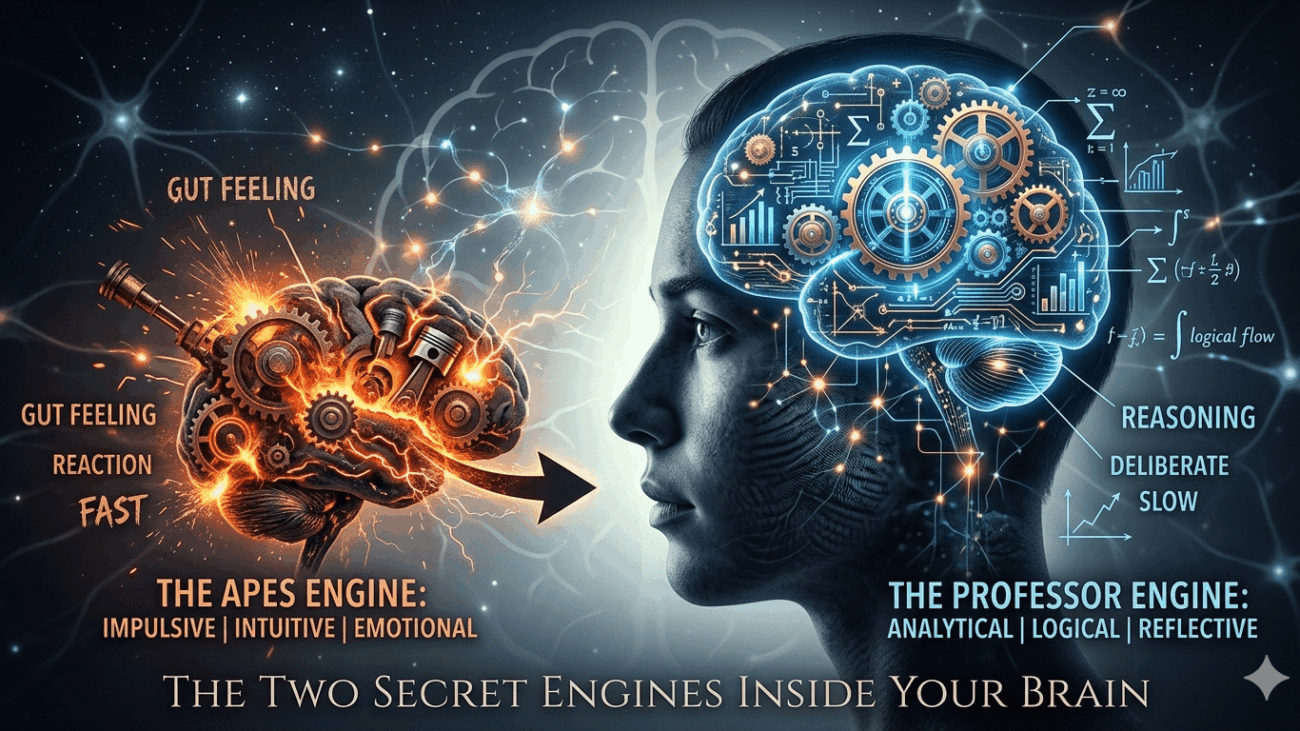
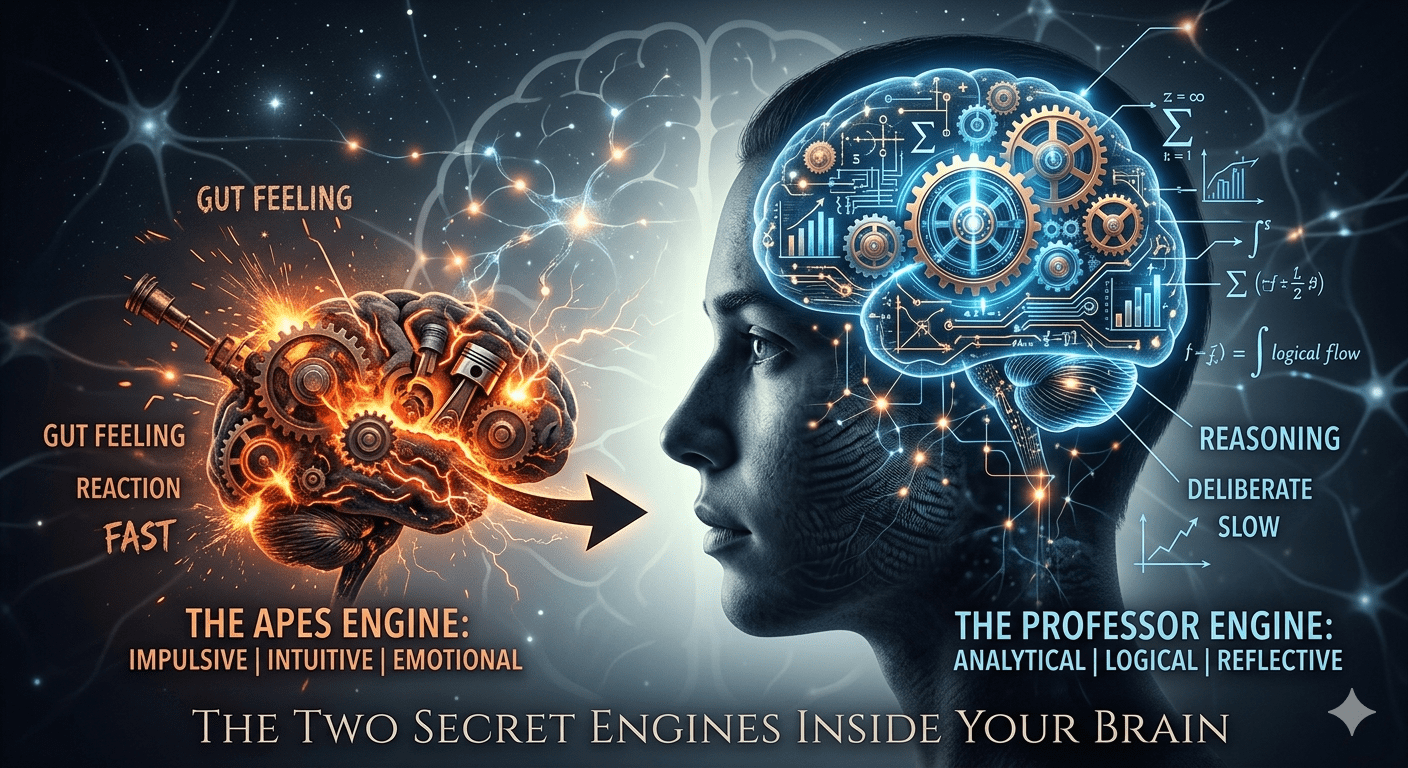
The Two Secret Engines Inside Your Brain:

We like to think we are always smart and logical with our money. We imagine our minds as calm, careful courtrooms where every purchase or life choice is weighed with perfect precision.

But let’s be honest. Have you ever gone to the market with a strict budget, got overwhelmed by the crowds, and ended up buying things you didn’t need just because they looked flashy?

Psychologist Daniel Kahneman won a Nobel Prize for explaining exactly why we do this. He revealed that your brain does not have just one way of thinking. Instead, it relies on two completely different internal engines to get you through the day: System 1 (The Autopilot) and System 2 (The Detective).

“System 1 runs automatically and System 2 is normally in a comfortable low-effort mode, in which only a fraction of its capacity is engaged.”Daniel Kahneman

“System 2 is activated when an event is detected that violates the model of the world that System 1 maintains.”Daniel Kahneman

Understanding these two systems is the secret to knowing why we make impulsive mistakes, how shops trick us, and why technology is changing our choices forever.

Let’s meet our Brain’s 2 Engines

🧠 The Fast Autopilot or System 1

System 1 operates automatically, instantly, and completely behind the scenes. It requires zero conscious effort or energy. It runs on gut instinct, emotions, habits, and quick mental shortcuts. System 1 is our brain’s survival mode.

Some easy examples of this mode are, we slam on our car brakes when a dog runs into the road, we can instantly recognize an angry face, immediately tell that 2+2=4. It is incredibly fast, but the major flaw is that as it is highly impulsive it can be easily tricked by illusions or clever advertisements.

🕵️‍♂️ The Slow Detective or System 2

System 2 is our conscious, deliberate, and logical mind. It handles the heavy lifting, like complex math, deep analysis, and self-control. It is the part of your brain that ‘you actually think of as “you.”

When do we use System 2, we use it when we try to calculate something difficult in our head, or search carefully for a specific address in an unfamiliar neighbourhood. But the major weakness of System 2 is that it is fundamentally lazy. Our brain burns a massive amount of energy when System 2 is working hard. Hence, to save energy, our brain constantly tries to shut the Detective down and moves towards the Autopilot mode.

The Retail Trap: Why Your Detective Goes to Sleep

Because your brain treats System 2 like a scarce battery, you navigate almost 90% of your daily life using the fast shortcuts of the System 1 Autopilot. Supermarkets and online stores understand this biology perfectly. They design crowded, noisy, and bright environments specifically to exhaust your Detective and exploit your Autopilot.

“Nothing in life is as important as you think it is, while you are thinking about it.”Daniel Kahneman

Imagine walking into a chaotic festive market. You start with a great System 2 plan: you will compare prices, check labels, and stick strictly to your budget.

But within half an hour, your mental battery drains. The bright neon signs, loud music, pushy salespeople, and endless choices force your brain to do too much work. Your logical Detective gets exhausted and falls asleep.

Suddenly, your Autopilot takes the wheel. You see a flashy red “Special Deal!” sign on a luxury item you don’t even need. Instead of doing the math, your Autopilot sees the bright color, gets excited, and throws it into the bag. You didn’t make a smart, rational choice; your tired brain simply took the easiest route out.

The Future: AI as a Tireless Detective

This biological reality is why humans can never be perfectly logical all the time. Our brains simply run out of battery. This is exactly where the rise of Artificial Intelligence changes everything.

An advanced AI assistant is essentially a permanent, tireless version of System 2. It has infinite energy, never runs out of fuel, and completely lacks a flawed, emotional Autopilot.

By letting software handle our budgets, compare prices, and manage our shopping, we are replacing our exhausted human Autopilot with a sleepless digital Detective. We might finally achieve perfect financial efficiency—not by fixing our broken human logic, but by handing our choices over to a machine that never needs to sleep.

image_582d5dbd

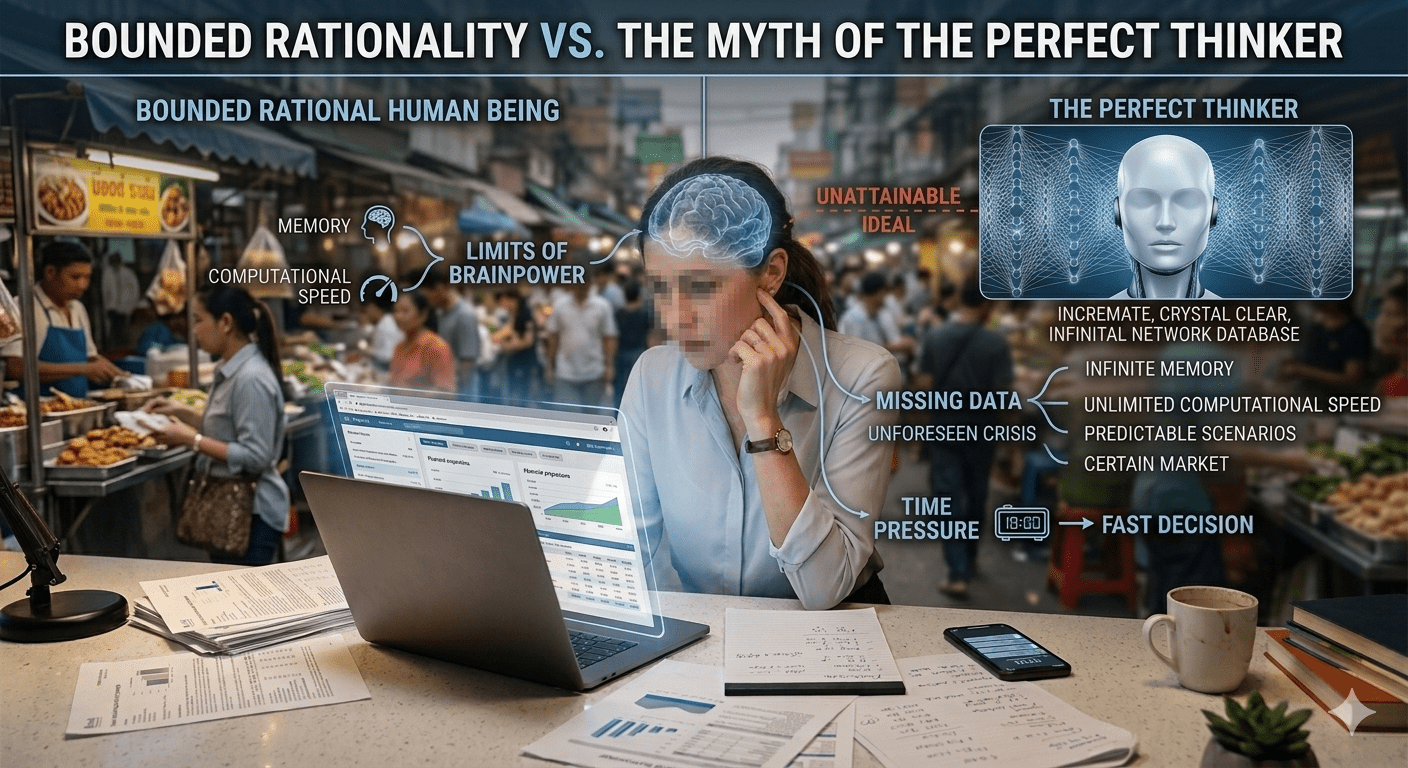
Why AI can finally turn humans into ‘Economic Man’ from ‘Bounded Rationals’

“The algorithm forces us to act with flawless logic, but it does so by wiping away the beautiful, messy spontaneity that makes us human.”

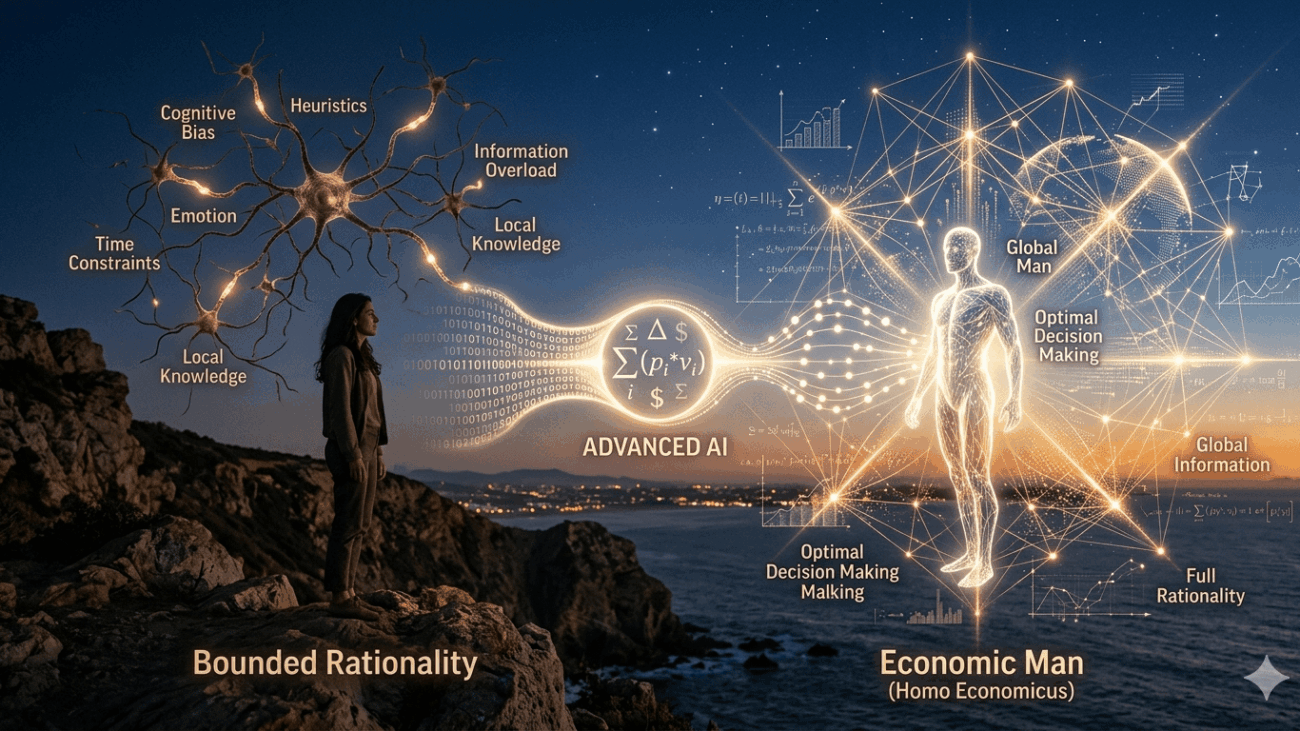
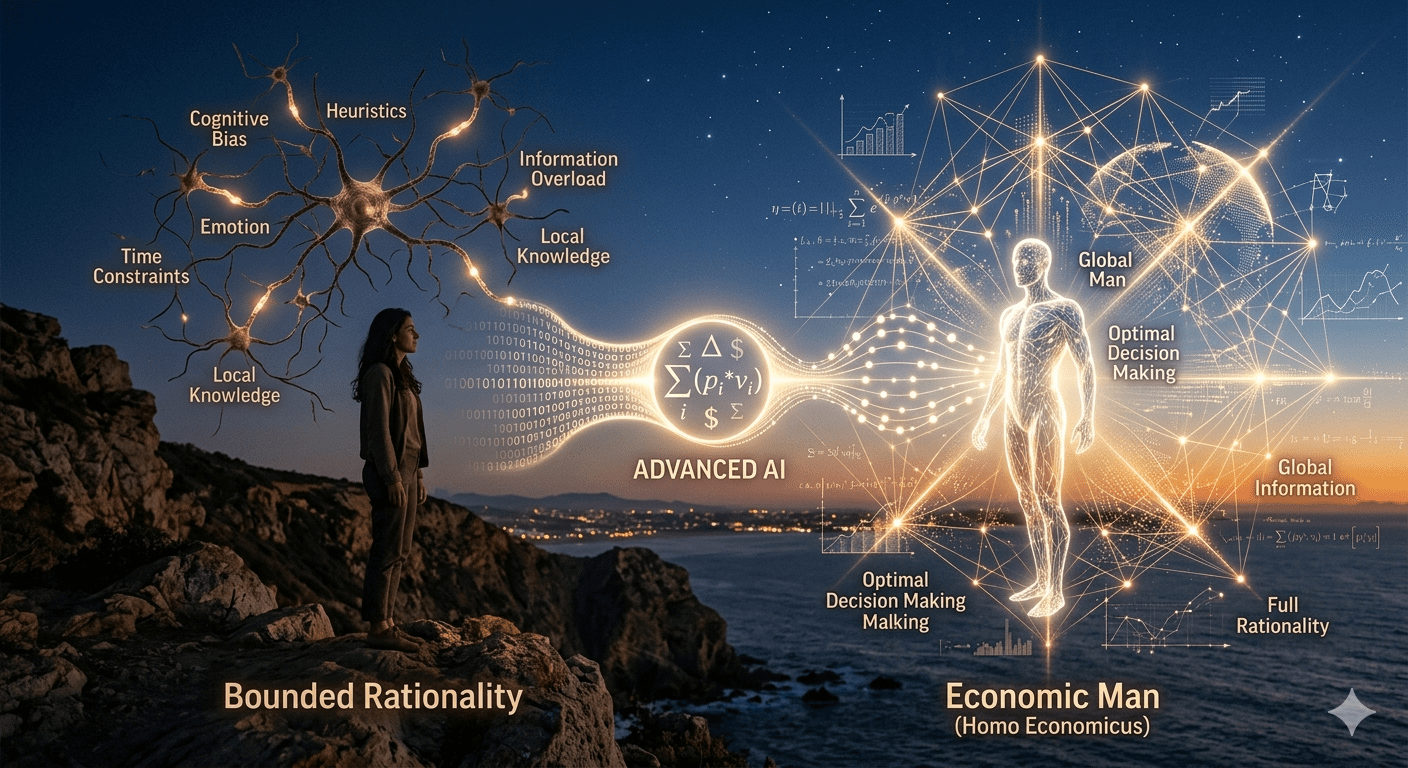
AI can finally turn humans into ‘Economic Man’ from our current state of ‘Bounded Rational’ players by acting as an automated, hyper-logical proxy that removes the biological limits of our brains. By managing our daily transactions, AI can strip away the three constraints that Herbert Simon identified in his theory of Bounded Rationality.

Human Logic has 3 boundaries, a) Limited Brainpower b) Missing Market Data and c) Panic, Fast Timing leading to bounded decision making. However, with the advent of AI, we humans will have all the Real Time Information for Infinite Computation and Instantaneous Execution leading to purely rational decision making which will make us strive towards the ‘Economic Man’.

Let us how dive a bit deeper.

1. Erasing the Information Gap

Real humans cannot know every price, tariff, or shipping fee on earth. We buy based on trust, guesswork, or whatever shop happens to be nearby. As such the classical “Economic Man” fails to exist.

An AI agent does not guess. It uses automated web scraping and instant data feeds to track the entire global economy at once.

The Difference in Action: Buying a High-End Laptop

The Bounded Human: You visit a couple of electronics stores or check one major online retailer. You get overwhelmed by technical jargon, worry about warranty terms, and just make a best guess.

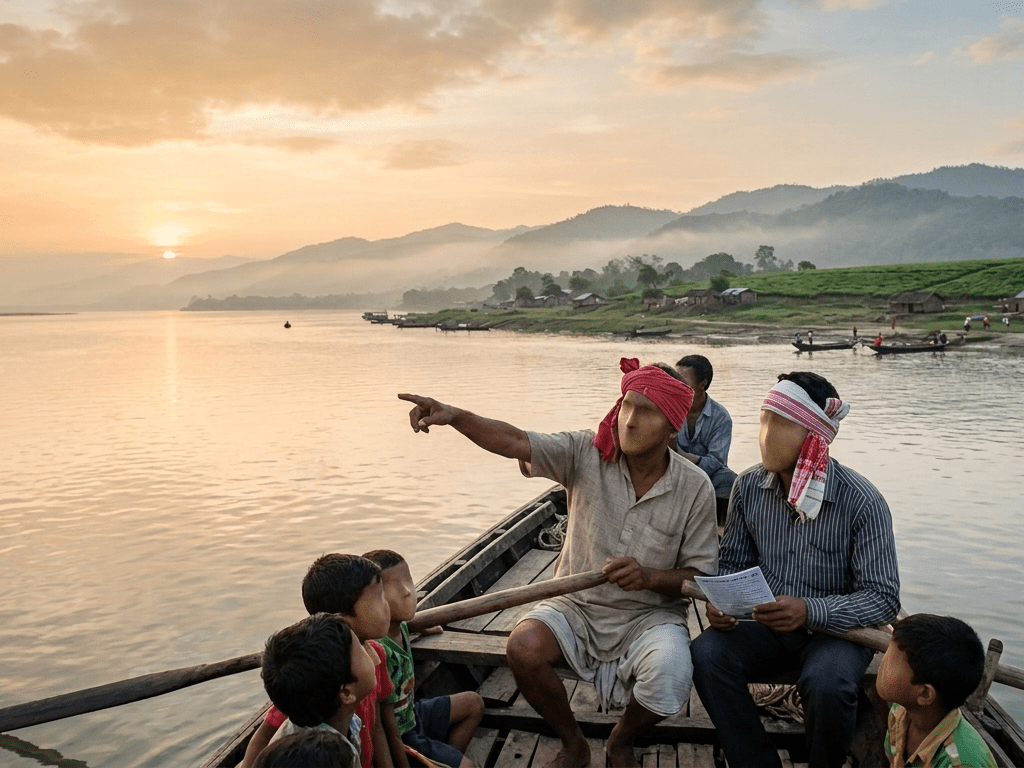
The AI “Economic Man”: In milliseconds, your AI scans thousands of global suppliers, compares import duties across borders, calculates local delivery delays to Assam, and tracks historic price drops. It instantly secures the absolute best deal on earth, completely bypassing human information blindness.

2. Eliminating Choice Fatigue

Human brains get tired. When we are flooded with too many options, coupons, and combinations, our mental processors overheat. We experience “choice overload” and make impulsive decisions just to get the shopping over with.

An AI agent never gets tired, never feels stressed, and doesn’t care about flashy packaging. It operates purely on cold, hard math.

Let’s look into a very common example of booking a Family Trip

The Bounded Human: You look at 10/15 different websites, resort, compare packages, look up hidden resort fees, and try to calculate fuel costs. After an hour of staring at a screen, your brain gives up. You pick a mid-range hotel with nice pictures and say, “This is fine.” You didn’t get the best deal; you just stopped because your brain was exhausted.

The AI “Economic Man”: Your AI assistant evaluates millions of combinations of room availability, vehicle wear-and-tear, and seasonal price dips in less than a second. It is completely immune to clever marketing tricks, beautiful website designs, or emotional manipulation. It picks the mathematically perfect option without a single ounce of mental fatigue.

Here, AI with its upgraded ‘Processing Power’ operates rationally, no brand loyalty or nostalgia like human brains, completely immune to clever marketing tricks, visual packaging, or emotional manipulation, cognitive bias and provides option.

3. Eradicating Time Constraints

We, Humans are bound by the clock. In the real world, time runs out, traffic rushes by, and deadlines approach. When we are forced to make decisions in a panic, our logic completely breaks down.

An AI agent operates at computational speeds. It doesn’t experience panic, wait in traffic, or rush because a deadline is looming. It acts instantly and flawlessly, even while you sleep.

Booking a Ride in Rush Hour

The Bounded Human: Imagine you are standing at the crowded rotary during evening rush hour. It is getting dark, buses are honking, and you need to get to the location for an urgent meeting. You open a ride-hailing app, see a high surge price, and feel your stress rising. Because you don’t have 15/20 minutes to stand on the road comparing different apps, checking alternative routes, or waiting out the surge, you panic-click “Book.” Chances are there that you made a terrible financial deal simply because the clock ran out.

The AI “Economic Man”: Your personal AI assistant predicts the traffic surge before you even leave your building. It monitors changing traffic patterns, evaluates public transit delays, and micro-negotiates with independent ride-pooling systems across multiple platforms simultaneously. It books the most efficient route at the absolute lowest cost in a split second. You get moving without ever experiencing a single moment of time-pressured panic.

The Paradox: Are We Rational, or Just Bystanders?

While AI gives us the perfect choices of the “Economic Man,” it leaves us with a quiet riddle: if a machine does our thinking, are we truly the rational ones?

By giving our choices away to software, our minds do not suddenly grow into supercomputers. We simply let go of the steering wheel. The algorithm forces us to act with flawless, cold logic, but it does so by wiping away the beautiful, messy, and unpredictable sparks that make us human.

Herbert Simon showed us that human flaws have their own poetry—we choose warmth over math, and “good enough” over perfection. Now, as silent AI agents take control of our choices, the textbook phantom of perfect logic finally comes to life. We will finally achieve the flawless efficiency we always chased. But we must ask ourselves: are we elevating our minds, or are we trading our human soul for a perfect calculation?

image_586cf34e

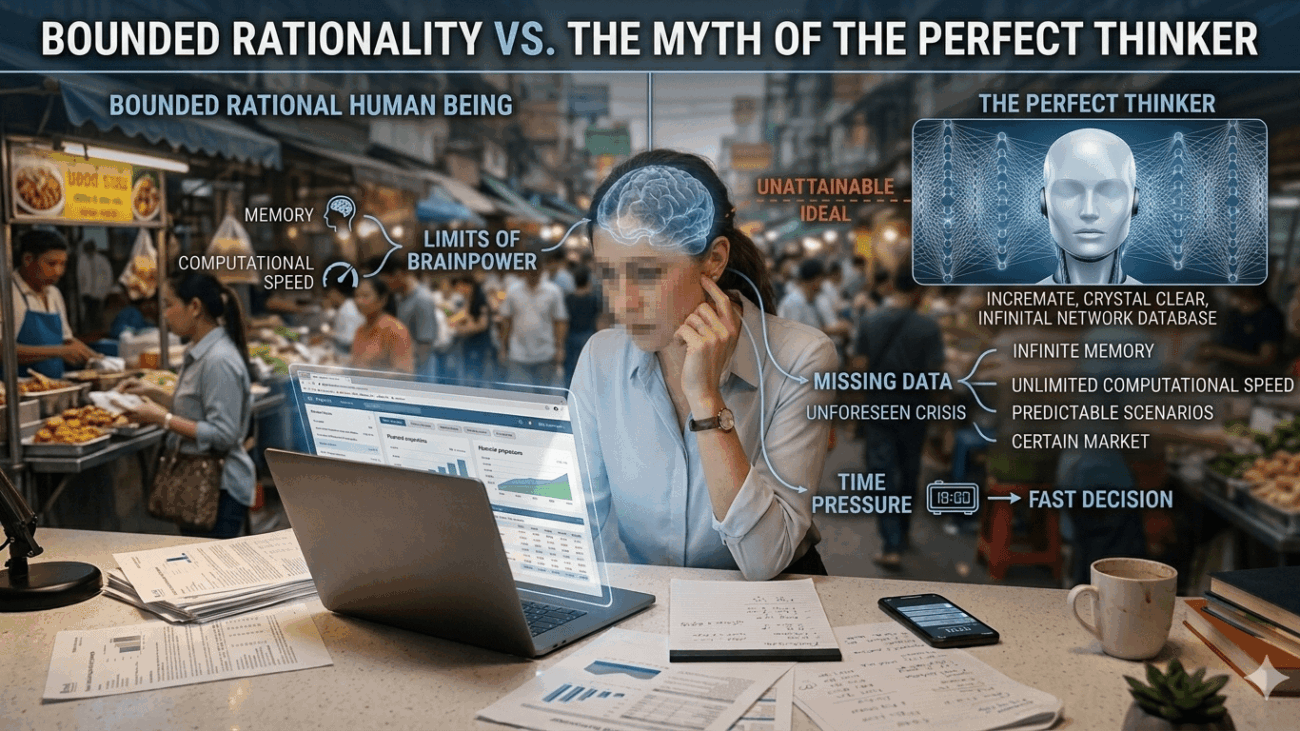
The Myth of the Perfect Thinker: Why You are a “Bounded Rational” Human Being?

We like to think we make flawless financial choices. We imagine ourselves weighing every option, calculating every discount, and picking the absolute best deal, i.e the perfectly logical creature of economics textbooks, the “Economic Man.”

But let’s be honest. Have you ever walked into a market, completely overwhelmed by the noise, the traffic, and thirty different vendors yelling out prices for the same bananas, and just bought from the first stall/ vendor you saw? If you have, they you are a normal human being, congrats.

A brilliant thinker named Herbert Simon looked at how humans actually make choices. He researched extensively and came to the concuslion that we, humans are not supercomputers. We as humans, normally weighing the options, not every available option; calculating discounts, not every discount, and then picking up the best deal as we presume, which may not be the best, but we are satisfied and make the purchase/ deal.

Simon first laid out the core idea that human decision-making is limited by cognitive capacity and organizational constraints, challenging the classical economics assumption of perfect rationality. He then introduced the foundational concept of Bounded Rationality in his landmark 1947 book, Administrative Behavior.

Simon argued that human rationality is “bounded” (or limited) by three major things: the limited information we have, the limited processing power of our brains, and the limited time available to make a decision.

Instead of searching forever for the perfect choice, humans practice what Simon called “satisficing”—a combination of satisfying and sufficing. We choose the option that is simply “good enough.”

Let us discuss Bounded Rationality in more simpler terms.

1. The Boundary of Information (We Can’t Know Everything)

The “Economic Man” knows the exact price and quality of every product everywhere. In reality, we operate in a fog.

Imagine you are shopping for a Muga Silk Mekhela Chador for a wedding. To be a purely economic thinker, you would need to visit every single weaver in Sualkuchi, check every shop in Fancy Bazar, and test the exact chemical purity of the silk threads in a lab. Because you cannot possibly access or process that much data, you rely on trust. You buy from a shop your aunt recommended, hoping the quality is good and the price is fair. Your decision is rational, but it is bounded by the information you have.

2. The Boundary of Brainpower (Our Brains Get Tired)

Our brains cannot calculate complex mathematical probabilities on the fly. When faced with too many choices, our mental processors overheat.

Think about booking a holiday trip to Kaziranga National Park. You are flooded with choices: dozens of resorts, varying jeep safari packages, hidden resort fees, and fluctuating fuel costs. A supercomputer would calculate the exact utility-to-cost ratio of every single combination. Your human brain, however, experiences “choice overload.” After scrolling through three travel websites, you get tired, pick a mid-range resort with decent photos, and say, “This looks fine.” You didn’t find the absolute best mathematical deal, but you found one that satisfies your basic needs.

3. The Boundary of Time (The Clock is Ticking)

In textbooks, decisions happen in a vacuum. In the real world, time runs out.

Imagine the chaotic rush hour at the Jalukbari rotary in Guwahati. You need to get to Khanapara quickly. To be purely rational, you should pull over, analyze live satellite traffic data for three different routes, calculate the wear-and-tear cost on your vehicle per minute of idling, and check real-time fuel prices. But you don’t have twenty minutes to sit and calculate. The bus behind you is honking, cars are cutting you off, and you are already late. You make a split-second decision based on your gut instinct and take the bypass. It might not be the mathematically perfect route, but it gets you moving.

The Beauty of Being “Good Enough”

Herbert Simon’s concept of bounded rationality changes how we view ourselves. It proves that when we make “impulsive” or “imperfect” choices, we are not necessarily being stupid or lazy. We are simply adapting to a complex world with limited cognitive resources.

The “Economic Man” is a lonely, robotic fiction. He spends his entire life calculating, never experiencing the joy of a spontaneous purchase or the comfort of a trusted local vendor.

By accepting our bounded rationality, we realize that human survival doesn’t require us to be perfect. In a world full of infinite data and chaotic markets, being “good enough” is actually the smartest choice we can make.

image_6eee9c7f

Meet “Economic Man”: The Superhero of Pure Logic

Imagine a person who never tips out of kindness, never buys a brand just because it looks cool, and knows the exact price of fish in every single market across instantly. In economics, this imaginary character is called the “Economic Man” (or Homo economicus).

The idea was first shaped by philosopher John Stuart Mill in 1836. He wanted a simple baseline to understand how humans make financial choices. He knew real people are complex, but he created an idealized, perfectly logical character to make economic math easier.

To understand how this character thinks, let’s look at his Three Golden Rules, using everyday examples from Assam.

The 3 Rules of the “Economic Man”

1. Perfect Self-Interest

An Economic Man only cares about maximizing his own wealth, comfort, and well-being. He is entirely unaffected by emotions, peer pressure, or charity.

Imagine it is Bhogali Bihu season. A regular person might buy Doi (Curd) or Chira (flattened rice) from a local neighborhood vendor just to support a regular family business. An Economic Man would never do this. If a big supermarket chain three kilometers away sells the exact same Doi or Chira for ₹2 cheaper, he will buy it there without a single thought about community support or festive emotion.

2. Perfect Information

This character instantly knows everything about the market. There are no secrets, surprises, or hidden costs for him.

Suppose you want to buy a traditional Muga Silk Mekhela Chador. A normal buyer visits two or three shops in Sualkuchi or Guwahati, compares prices, and makes a best guess. The Economic Man instantly knows the exact thread count, history, production cost, and price of every single Mekhela Chador available across the entire state of Assam. He cannot be tricked by a salesman and never suffers from buyer’s remorse.

3. Perfect Logic (Rationality)

His brain operates like a supercomputer. He calculates the exact costs and benefits of every decision instantly to get the highest reward for the lowest effort.

Think about a daily commute from Jalukbari to Khanapara in Guwahati. A regular commuter might choose a bus based on habit, or take a bike because they enjoy the breeze. The Economic Man calculates the exact fuel consumption, wear-and-tear cost per kilometer, travel time down to the second, and the monetary value of his energy spent. He will mathematically pick the option that gives him the absolute maximum financial and physical return for the lowest possible cost.

Why Does This Model Matter?

Real people do not act like this. We buy sweets for our neighbors during festivals, we make impulsive purchases, and we often lack full information about what we are buying.

However, economists still use the “Economic Man” as a baseline model. By studying how a perfectly logical superhero should behave, it becomes much easier to predict, analyze, and understand how real people actually make financial choices in the real world.

So, as humans are we ‘Economic Man’ or something else. Just hold on for some time, we will dwell further a bit later…

IMG_9605

“Panch Prayag” –  The Himalayan Lesson – 2

After the visual spectacle of Devprayag, the road stretches out toward Srinagar, winding deeper into the heart of the mountains. This stretch isn’t just about the miles; it’s about the soul of the hills found in the simplest of places.

Leaving the confluence behind, we pulled over at a modest roadside dhaba, one of those small roadside hotels that looks like nothing from the outside and delivers everything on the inside. As it is said that in the mountains, “luxury” is often found in the most unexpected corners. We were greeted by a dhaba owner whose enthusiasm was as infectious as the mountain air.

What struck us first wasn’t the menu, but the spotless cleanliness of the place—a gleaming testament to the pride he took in his small haven. But the true star was the hospitality. There is an unbelievable warmth in the way a Pahadi host serves you; it’s not just a transaction, it’s an invitation into their world.

The meal? A steaming plate of Dal Chawal, simple and soul-satisfying. And the “best part” for any hungry traveller on a long mountain haul—eggs were available! There’s a specific kind of joy in finding a perfectly made omelette to complement your lentils when you’re hundreds of miles into a road trip. It was the kind of meal that fuels both the body and the spirit.

“Hospitality is the smell of fresh dal, a clean wooden bench, and a host who treats you like a long-lost friend.”

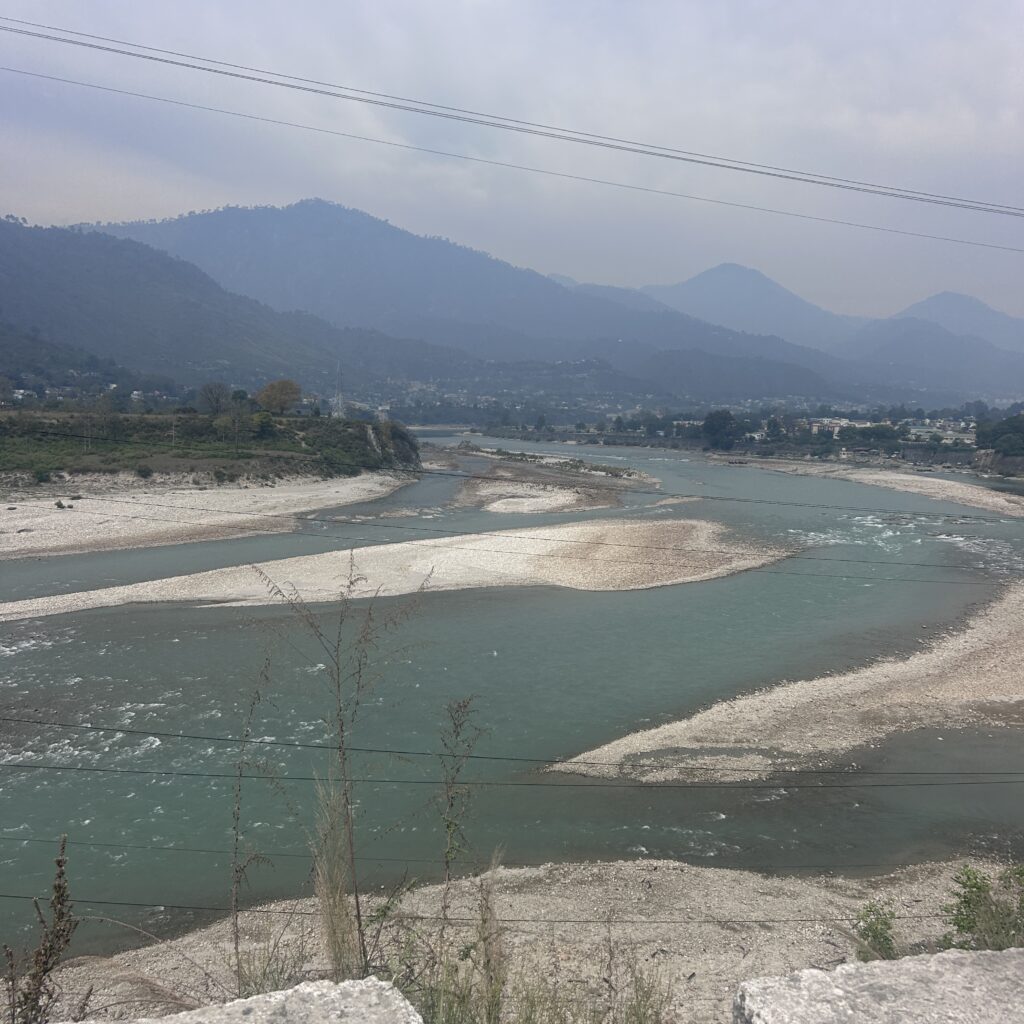
With hearts and stomachs full, we continued toward Srinagar. The road here begins to level out slightly as you approach the wide valley of the Alaknanda. The river stays your constant companion, its turquoise waters shimmering in the afternoon sun, guiding you toward the next chapter of the Panch Prayag journey.

Nature had other plans for us, to move away from frustration and be with nature, enjoy, I say it as a test of our patience as in the road towards Rudraprayag we met with road blocks, stoppages which seemed like that the mountains themselves were drawing a boundary.

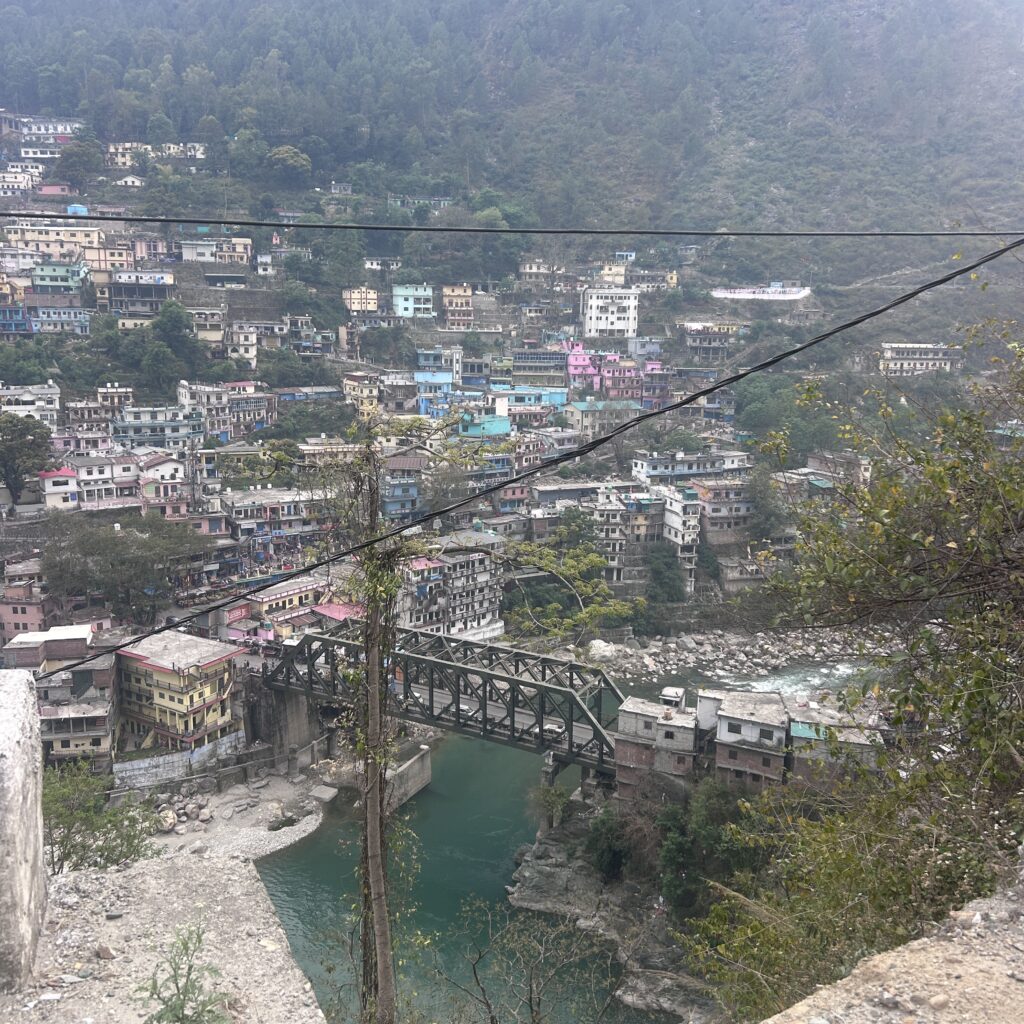
Srinagar, Garhwal’s Srinagar, finally after the tight, winding drama of the mountain roads, the town opens into a wide, sun-warmed valley that feels almost generous in its flatness. The largest and most developed town in the region, it wears many hats: educational hub, fuel stop, lunch destination, and quiet guardian of some extraordinary spiritual landmarks. The air here is noticeably warmer and the pace noticeably slower.

Near the river’s edge, the Koteshwar Mahadev Temple waits inside a cave, a sacred darkness carved by nature long before anyone thought to build a shrine.

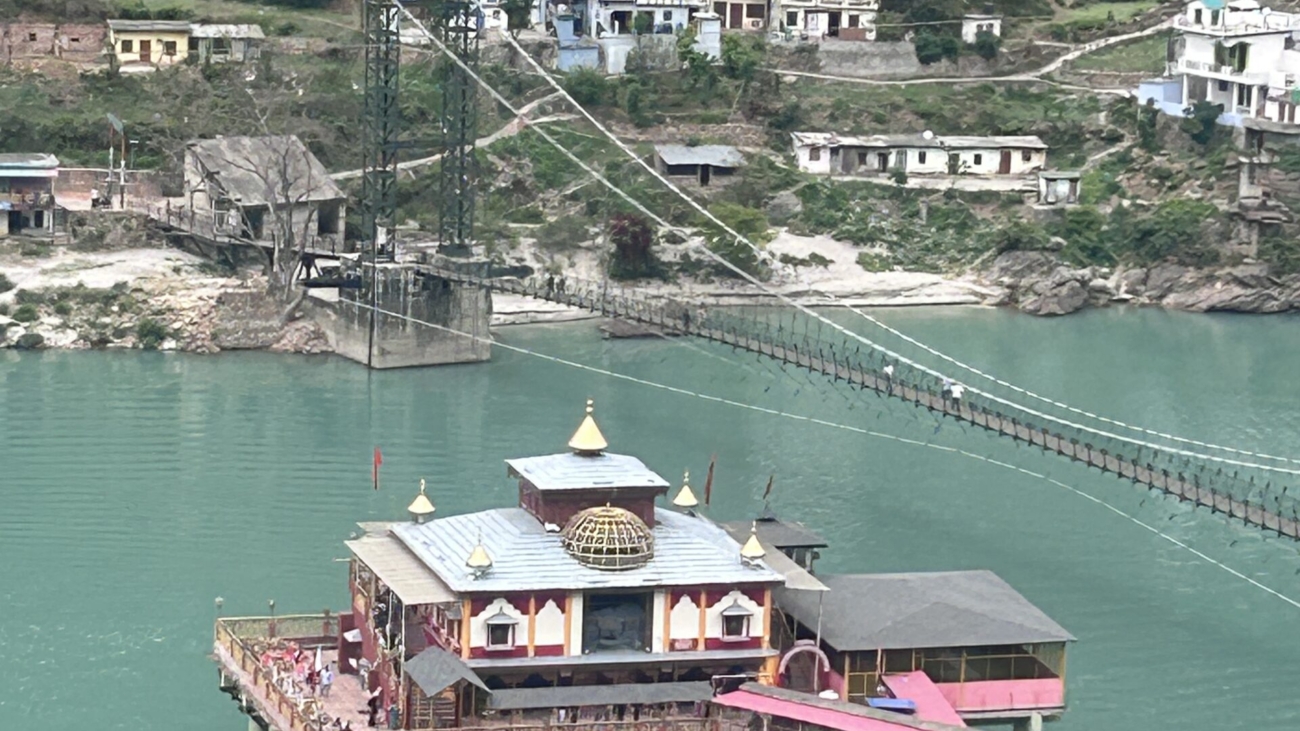
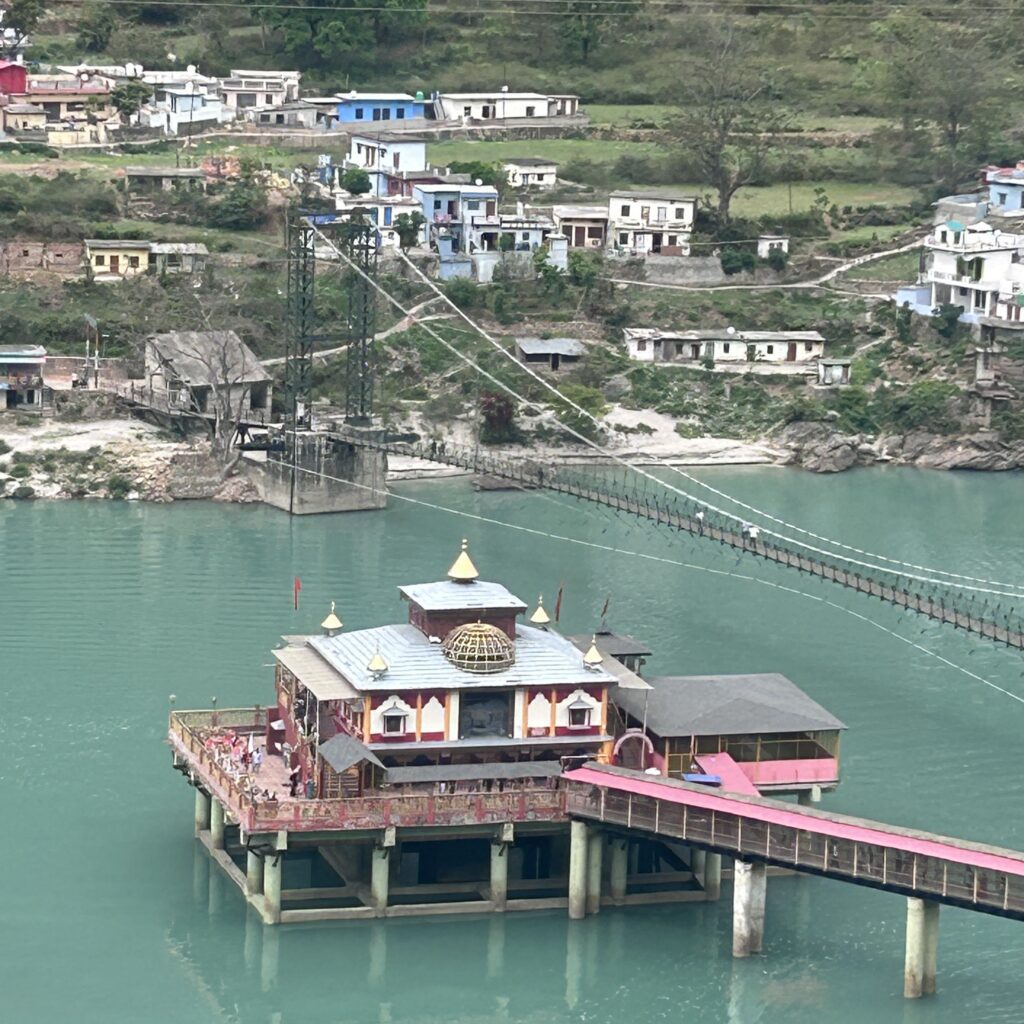
Dhari Devi, the ‘’Guardian Goddess of Uttarakhand’’ and ‘’The Spiritual Sentinel’’ is just 15 kms after crossing Srinagar. This is a highly revered shrine. The Dhari Devi Temple stands watch from an unusual perch, a raised platform in the middle of the Alaknanda River, elevated there after a dam altered the landscape forever. Legend says the idol changes its appearance from a girl to a woman to an old lady throughout the day. It is a powerful spot where you can see the river’s massive force being harnessed by the Alaknanda Hydro Power project.

The drive from Srinagar to Rudraprayag covers just 34 kilometres, but distance means very little in these hills. As Srinagar’s valley fades in the rear-view mirror, the mountains close in gently on either side, like walls of a corridor leading somewhere sacred. The road begins to hug the Alaknanda River more tightly as we heard before we saw around each bend.

Rudraprayag is the Confluence of Legends as it carries mythology, memory, and the ghost of a leopard. Rudraprayag is named after Lord Rudra, the fierce, untamed aspect of Shiva and the town carries that energy quietly but unmistakably.

This is the Second Prayag, the sacred meeting point where the Mandakini River, cold, green and restless from its long descent from the glaciers of Kedarnath, surrenders itself into the arms of the Alaknanda, which arrives with quiet authority from the direction of Badrinath. Standing at the confluence, you can almost see the two rivers resist each other for a moment before becoming one.

And here the road makes a great decision, one route peels away toward Kedarnath and the other continues along the Alaknanda toward Badrinath, tracing the river deeper into the mountains. Standing at this junction I felt at a loss as two sacred paths diverging in the hills, each calling to a different kind of pilgrim.

For me, Rudraprayag holds more than mythology, it holds memory — specifically, the memory of a childhood spent with a book. Long before I ever saw these mountains, I had read them. Jim Corbett’s “The Man-Eating Leopard of Rudraprayag”, his pursuit of a leopard that had terrorized the region for 8 long years , from 1918 to 1926, killing over 125 people and becoming, in its way, as legendary as the rivers it prowled beside. The animal moved like a shadow through these very hills, crossing rope bridges, entering locked homes, outwitting every trap laid for it. Corbett himself wrote of it with a respect bordering on awe. So, for me a childhood dream has become a picture now after four decades…

Gemini_Generated_Image_cy6vwbcy6vwbcy6v

“Panch Prayag” –  The Himalayan Lesson…1

Patience is a Virtue, but the View is the Reward.

“The mountains are calling and I must go.” — John Muir

It began as a quiet wish and ended as a ‘Dream Come True.‘ The mountains have always held a certain spell over me, but the Panch Prayag was something deeper. For me ‘The hills fascinate, but the rivers guide’.

My hectic, short-duration, long-distance ‘Himalayan Road Trip’ was a pilgrimage for the soul. Our road trip from Delhi to the heart of Uttarakhand has been a masterclass in “going with the flow.”

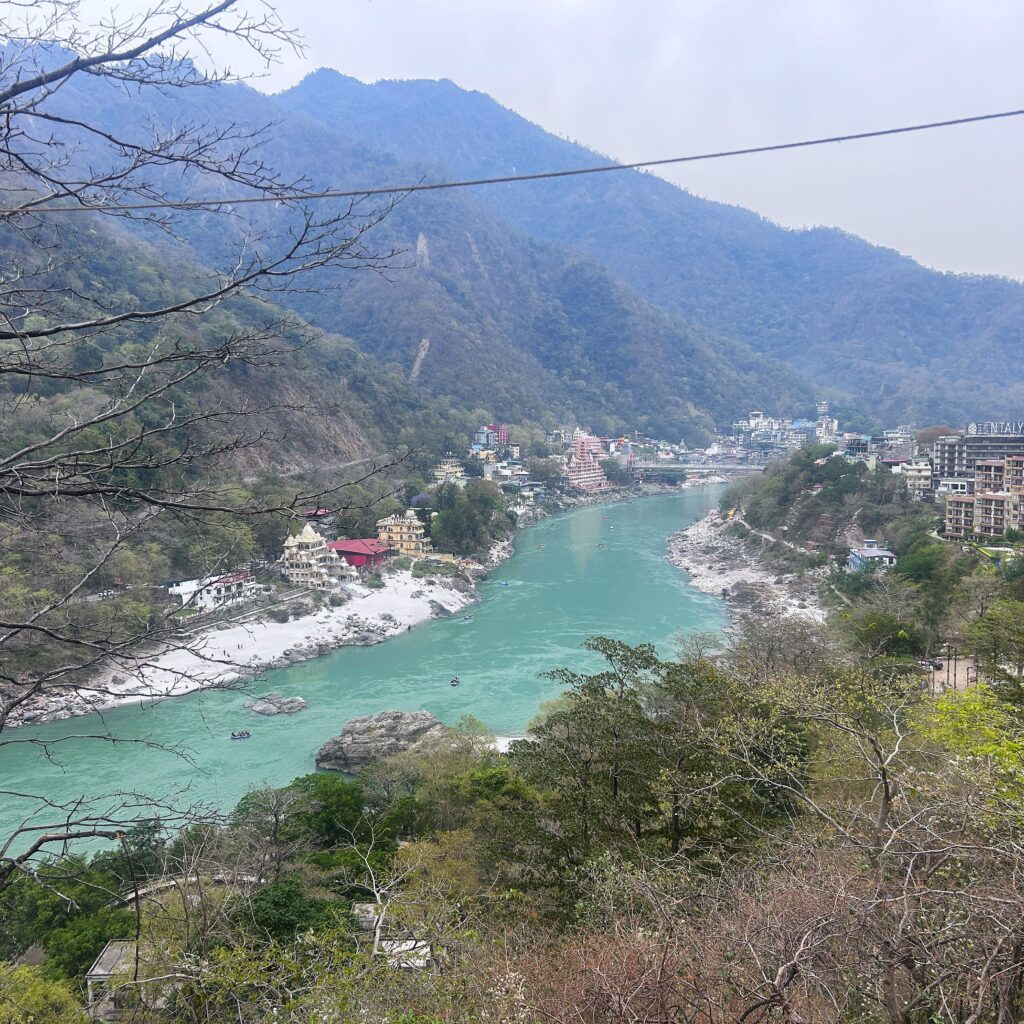
There is a unique magic in watching turquoise waters, crystal clear and pure, break into milky rapids deep in the valleys. These five holy confluences aren’t just geographical points; they are moments of stillness to be cherished forever.

Our goal was ambitious, a distance of around 500 kilometres, a 12-hour marathon behind the wheel, aiming for the heights of Joshimath by sunset.

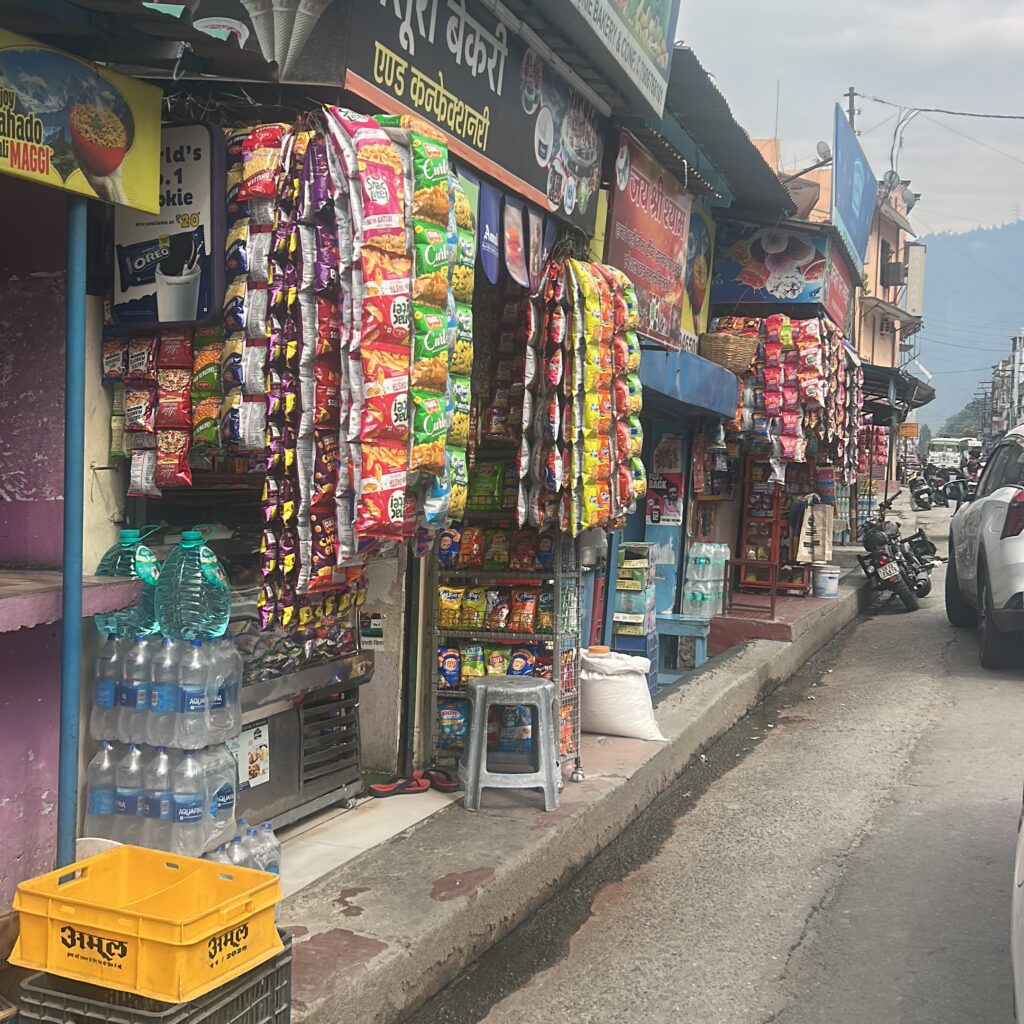
We hit our first hurdle early—the legendary, slow-moving tide of Rishikesh traffic. But as the urban clutter faded and the mountains began to rise, the frustration evaporated. It’s a true test of patience, where Rishikesh acts as the chaotic gatekeeper to the divine beauty of the Panch Prayag.

My aim was to Focus and Enjoy…

“Focus on the journey, not the destination. Joy is found not in finishing an activity but in doing it.”  Greg Anderson

In the end, the landscape didn’t just soothe the delay; it made every minute of the drive feel like a privilege. With age comes in experience, patience and the ability to hold back. Its difficult in a chaotic situation but as it is said that “Patience is not the ability to wait, but the ability to keep a good attitude while waiting.” 

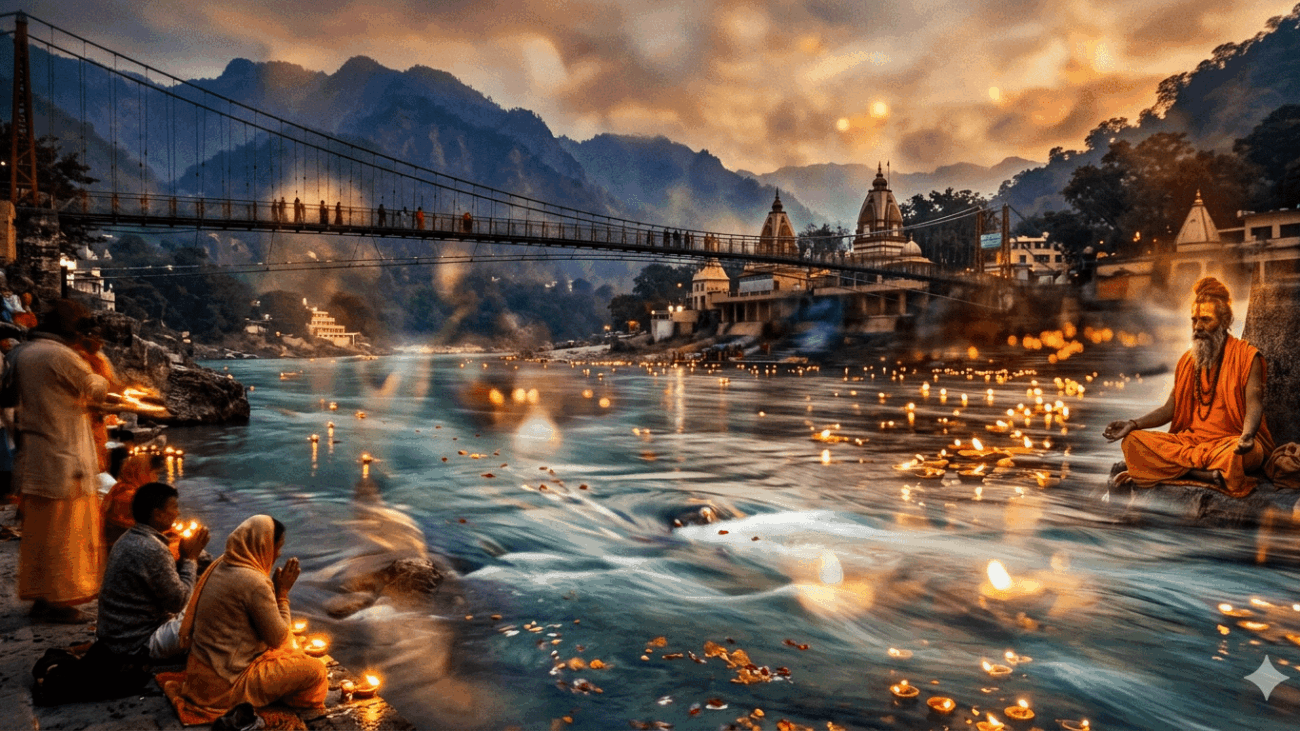
Rishikesh, also known as the Yoga Capital of the World, is where the Ganges leaves the mountains and enters the plains. One who wants a stopover here can visit the iconic suspension bridges, Ram Jhula and Lakshman Jhula (scheduled for re-opening shortly), and the evening Ganga Aarti at Triveni Ghat. It’s also the adventure hub for white-water rafting and bungee jumping.

The transition into the Himalayas isn’t always a silent one. Breaking free from Rishikesh felt like navigating a beautiful, frantic obstacle course. The roads hummed with an unruly energy, a sea of white-water rafting vehicles, their brightly colored rafts strapped precariously to their roofs like oversized shells. These “river-runners” zig-zagged through the dense traffic, filled with excited passengers ready to challenge the rapids, adding a layer of adrenaline-fueled chaos to the legendary Rishikesh congestion.

As a driver, it was a test of patience, but there was something undeniably “Himalayan” about the sight of those rafts. They were the last remnants of the commercial rush, the final markers of the adventure capital before the road narrowed and the mountains claimed the landscape for themselves. When you are in such a trip the roar of the engines, narrow roads, unruly driving all such adds to the adventure…

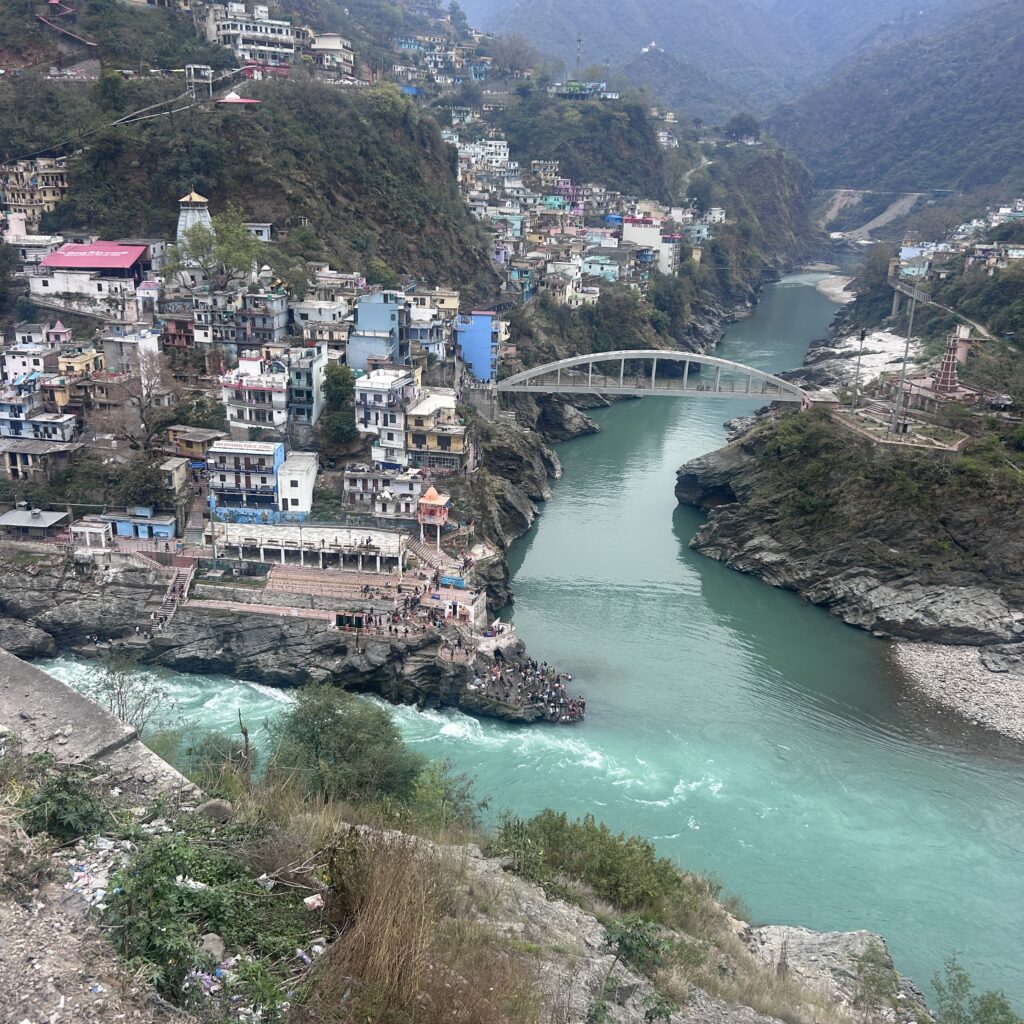
Slowly, the noise of the frantic traffic faded into the rearview. The air grew thinner, the emerald valley deeper, and suddenly, the horizon opened up to Devprayag, the “Godly Confluence”.

Standing above the Sangam, the reward for the long drive is instant. As I witnessed the marriage of opposites: the Bhagirathi, turquoise and turbulent, rushing down with a roaring fury, meeting the emerald waters of Alaknanda, calm, sedate, and deep green. At this precise point, they lose their individual names to become the Ganga. The sight is a mesmerizing act of mother nature, nature’s artistry at its maximum, which made the tiring 75 kms of drive into a moment of pure, silent awe. The unique stillness, the sound of the flowing water makes you forget the honking horns, traffic, the heat of the plains. For me, after reaching there, I felt that Devprayag isn’t just a destination or confluence, it is a new beginning, a place where the Calm and Chaos ends, becomes more soulful and teaches us the lesson of togetherness, giving up and energy.

Where two rivers meet, a new story begins. Devprayag is where the earth’s heartbeat becomes a river.

It also houses the 10,000-year-old Raghunathji Temple.

How to get there?

By Road – around 300 kms from Delhi. By Train – Delhi to Haridwar/Rishikesh (e.g., Shatabdi, Janshatabdi, Nanda Devi Exp, Mussoorie Exp). and then by bus or taxi/car to Devprayag (around 70 kms). By Air – Jolly Grant Airport (DED) in Dehradun, 90 km away from Devprayag.

Gemini_Generated_Image_1ccea91ccea91cce

The Architecture of a Meaningful Life: From Russell’s Wisdom to the Digital Age

“The purpose of our lives is to be happy.” Dalai Lama

What is the ultimate goal of life? It’s a question that often catches up with us during quiet moments or at major crossroads. When we don’t have a clear sense of purpose, it’s easy to feel “adrift”, as if we are reacting to life rather than living it.

The truth is that a meaningful life isn’t found in social status or the accumulation of wealth. It is built, brick by brick, through the deliberate pursuit of happiness and the cultivation of a peaceful mind.

Happiness as an Achievement

We often think of happiness as something that “happens” to us, but the philosopher Bertrand Russell argued in The Conquest of Happiness (1930) that it is actually an achievement. It requires effort to overcome the psychological traps that steal our peace, the traps that have only become more sophisticated in the 21st century.

What comes to my mind is the beautiful and meaningful quote of Russel, “To be without some of the things you want is an indispensable part of happiness.”  

Even today, the 3 main culprits of our unhappiness as pointed out by Russell are universal truth:

  1. The Ego: An unhealthy preoccupation with our own importance and how we are perceived.
  2. Envy: The exhausting habit of measuring our worth against others.
  3. Competition: The relentless “rat race” that treats life like a struggle to be won.

The Digital Evolution: From Envy to FOMO

While Russell was writing in the 1930s, his insights feel like a prophetic blueprint for the smartphone era. What he called “Envy,” we now experience as FOMO (Fear of Missing Out).

Social media has digitized the comparison trap. We always compare our “behind-the-scenes”, i.e. our real, messy lives with everyone else’s “highlight reel.” Our Ego becomes tied to the dopamine loop of likes and notifications, leading to the “nervous fatigue” which Russell warned about nearly a century ago.

Today, we aren’t afraid we won’t have bread for breakfast; we are afraid we aren’t outshining our neighbours on a global scale.

My Take: Hobbies: Our Secret ‘Other World’

To combat this digital noise, we need a strategy to stabilize our minds. This is where the ‘art of making life colourful’ comes in. Developing a hobby, like gardening, reading, photography, or philanthropy is not just a way to pass the time, in today’s world it is a therapeutic necessity.

The playwright George Bernard Shaw once captured this perfectly, “The person who has a hobby may be said to have another world at his command.”

Buddhist philosophy echoes this through the concept of ‘Right Mindfulness.’ When you are fully immersed in a hobby, you are practicing ‘meditation in action.’ In those moments, the ego falls away as we are not competing for ‘reach’ or ‘likes’, rather we are simply being.

The Healing Power of the Natural World

While hobbies ground our minds, nature grounds our souls. There is a profound sense of gratitude to be found in the stillness of a forest or the majesty of a mountain. I do really find it, amidst nature rejuvenates me.

In The Monk Who Sold His Ferrari, Robin Sharma reminds us that a close connection with nature frees us from the noise of modern greed. Nature doesn’t have a refresh button or a newsfeed. By slowing down to match the pace of the natural world, we align ourselves with a simpler, more authentic version of ourselves.

“Nature does not hurry, yet everything is accomplished”, another age-old wisdom by LaoTzu

If you are ready to pivot toward a more joyful existence, you don’t need a radical overhaul.

It’s time to ‘Call for Action, for Reclaiming our Joy’

What comes to my mind are the following active shifts to our perspective and the actionable points to be undertaken:

  1. To Practice ‘Selective Ignorance’. Start may be to unfollow accounts that trigger our comparison-envy. Next will be to replace our passive scrolling with an active hobby that builds a skill or creates something tangible leading to joy and satisfaction.
  2. Creation of ‘Ego-Free Time’. Let’s dedicate some of our time each day to an activity that cannot be ‘posted.’ It is as simple as that to walk in the woods without taking a photo as this will be an experience that belongs entirely to you.
  3. ‘Competition to Admiration Shift’. It is said that ‘The antidote to Envy is Admiration’. Instead of feeling diminished by someone else’s success, lets us try and reach out to offer genuine praise. It will break the cycle of comparison.
  4. ‘Release’. To release the weight we hold within, free ourself, say from our obsession with material gain and also from past hardships. Look out for ‘Optimism’ the silver lining which is always there. The more we practice optimism, the more stronger and happy we become.

By seeking joy in these small, creative acts, we don’t just improve our own lives, we contribute to a world that is a little more peaceful, grounded, and colourful for everyone.

IMG_8768

A day to remember, so blessed…

There is always a thrill in everyone when the destination is Goa. Yes, I too was thrilled. But no, there was no thrill in me as I had visited Goa to attend a conference in Feb 26 and to go to the same place, à la the same venue was not at all a thrill inside me honestly. To go, travel around 90 minutes from the airport to the venue, some discussions and the next day fully packed with discussions culminating in a dinner and to return in the morning next day, again 90 minutes travel to airport, 3 hours flight time and then the notorious traffic congestion in Delhi, you never know how long you will have to be in the cab till you reach your destination. So I was not at all thrilled but it’s a part of life, a way to earn your living and your beloved company takes care of everything.

The 12th of March 26, a Thursday when I take vegetarian for my meals was another dampening factor. Finally after an enjoyable breakfast with the company of my friends, a little bit of leg pulling, as Goa was the destination, the ride to the airport was smooth, less traffic and flight was on time. 

Inside the flight as I got settled the request came, can you please shift to the window seat on the other side as my friends are seated next to you in the middle and window seat. Agreed, as they were young lads and were going to enjoy in Goa, I shifted to the window seat, leaving aside my comfort of seating in the aisle seat. 

The meal, although vegetarian was delicious and I enjoyed. This time deliberately I didn’t bring a book and so I tried sleep. But the excitement of the lads seated parallel to me made it difficult. So let me watch a movie, I checked and found that luckily an earlier download was available. no country for old man, Tommy Lee Jones and I enjoyed it fully.

Finally at around 1:30 pm landed in Dabolim airport Goa and as we waited for our vehicle a message flashed in what’s app that the scheduled meeting had been cancelled, the message read as “Due to ongoing geopolitical situation, the meeting has been cancelled. Inconvenience is regretted.”

So what do you do now? Stay back and do sightseeing or go back. We decided to go back and asked our team to book our return ticket on the earliest available flight to Delhi. Flight IA 488 was booked with scheduled departure at 7:20 pm. So we had some time with us and as we left the airport to have lunch, smiling and enjoying the circumstances the driver joined and remarked that in his 20+ years of driving, he has never ever heard of something like this. Also he was astonished to see us so cool, cheerful instead of cursing or swearing. I said that this is the was you should live your life, Do you have any other better option? Smile and be happy or swear and curse and spoil your day. He said that he has learned a new lesson for life. Together we enjoyed our lunch, he was also asked to join us and then we planned to go for some ride. We went to Panaji, then to Miramar beach, no getting down at around 34 degrees. Since we had to spend time, we decided to go to old Goa visited the Bom Jesus. From there we had a walk towards the river and found a jetty where ferries were transferring people with bikes, scooters, cars, trucks etc. we sat there enjoying the serene surroundings and also enjoyed two young kids angling to catch crabs. Within 20/30 minutes both of them were able to catch 3 crabs, good size. As we enjoyed coconut water in a nearby roadside stall, a lady customer was kind enough to answer our query regarding the ferry service. We were surprised when she said that it was free for people and only cars etc are charged they too a mere 10 rupees. 

As I sat on my seat, I was allotted 4E but as the passenger if 4D didn’t report or may have cancelled, I got to seat in an aisle seat which was not when I checked in for seat selection.

I called my travel agent to enquire about the vehicle details at Delhi airport, but to my utter surprise he informed that it will not be possible for them to arrange a vehicle even they agreed so when they were informed at 2 pm. Another surprise, but luckily a car was arranged by my efficient and ready to help office colleague. 

As the pilot announced that we are landing shortly and after few minutes the washroom will not available for us, I stood up but just got there and the passenger from seat 1A rushed in. The wait was made more longer as the pilots wanted to use. And then you stand, hold back and there is the long long wait to release. 

Have anyone had such an eventful day?

More frustrating situations to call it a bad day. 

What’s the outcome of this eventful day?

I would say that at the end of the day god was kind enough to make way for me to seat in an aisle seat. God had plans for me in advance, tested me, my patience and finally gave me a surprise.  At the end of the day, I am so grateful. I feel different, blessed as I was able to control my short temper, not get angry with the awkward situation, make my day miserable. However, with blessing and self control, I converted the disadvantage to my advantage, enjoyed a nice walk, became nostalgic seeing those kids angling and felt happy. 

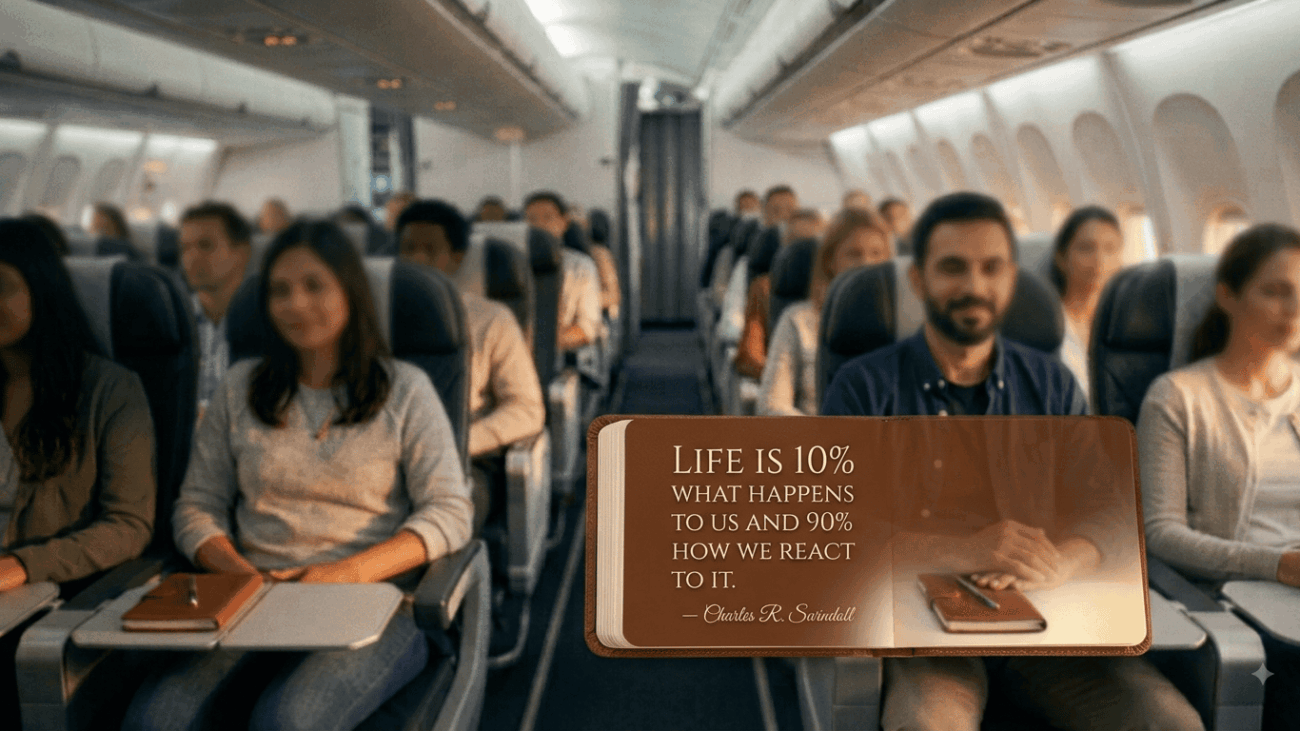
“Chance depends on circumstances. Choice depends on your attitude” someone had said.

So, my inner voice says that whatever the situation is, we must act in such a way to make it favourable, enjoyable and at the end of the day God is there with surprises, positive and enjoyable.

I am grateful, I am blessed and pray for everyone to be happy and live in peace. 

9:32 pm, penned onboard AI 488. 

da30ddb1-67ed-4100-b261-0e12c1463e83

Just Together Again

You’re so far away from me
You’re so far, I just can’t see
” Dire Straits https://share.google/95Wojowwbsii3k6FE

After 53 days, we were together again. Service life is as such, 2026 has been so happening, my transfer to Corporate Office, located at the capital city of my country, my wife’s transfer to the capital city of my state, all this within a month and it was so hectic that we didn’t get enough time to be sad, but just went on to get separated due to work, our means of livelihood.
It was a one night trip and as I landed, the outside rain made it more romantic and also nostalgic. As I passed through the known landscape, days spent during my student days, I was impatient to reach to my better half.
God was always there, and I am grateful that even after the heavy showers, water logging which has become so common these days in this city, we sailed through smoothly and I reached on time. 
A cup of black coffee with Pitha made by her was the added pleasure. My brother called and informed that he is coming for lunch with his wife, cooking my favourite dish, which I miss so much in my new place of work. 
As there was time, we decided to go to a nursery to buy some saplings, so that I can plant them along with the ones that I have brought. So we visited the old famous nursery, but unluckily the flowering creepers we were looking for was unavailable and only one was available. The price was unbelievable, dejected we came out and just saw a makeshift nursery with their plants being displayed in the footpath. A bit skeptical, we went inside to be greeted with warm by two persons. As rain began to pour, they offered their chairs for us. Surprisingly we found most of our requirements there except one and few other varieties too. Good people are difficult to find but when you find them you have to just appreciate them. I am so grateful to have found them and their warm, respectful nature made it so enjoyable, we didn’t have to bargain, the owner offered some very useful tips and prevented us from buying certain manure, which were recommended in social media, even he could have been benefitted. May God bless them. 
The lunch was stupendous, enjoying it together with near and dear ones is another added spice. A long gossip and after a simple dinner it is bed time.
We spoke about life, the emptiness, compulsions and way forward. Sometimes you have give time, time to heal, time pass by and look out for the positivity only. Easier said than done. 
The need for us is to relook, rethink and reinvent. Time waits for none, some sacrifices are to be made, before it’s too late. 
We believe that what God has done for us has done for our good and what will happen will also happen for good. 
There has to be a balance between money, work and life. 
Separation even temporary, is painful, maybe God is testing us and we definitely will survive, we believe that we will overcome and come out with flying colours…
As I pen my feelings in my flight to my place of work, I am so grateful to God that I am blessed… 
In my return flight, the seats near me are vacant and I am so thankful and grateful…
God always has surprises and plans for you.

6901605b-aa58-49cf-8958-ff1d87467321

Wonderful Learnings

Legacy of Grace: My Mother, The Ultimate Giver

The name of the book, the author and the tagline; just as it goes it’s so true, unbelievably true. “Give and Take” byAdam Grant is in true sense ‘A Revolutionary Approach to Success.

I finished reading Give and Take in January 2026, and and I admit that I was late, late in buying and reading. But ‘better late than never.’ While I felt a pang of regret for not finding these words sooner, the clarity they provided was profound. The concept of “Givers” is very nicely elaborated as those rare individuals who contribute to the world without expecting anything in return. It took me until 2026 to fully find the words, but looking back, I realize, I was raised by the ‘Ultimate Giver‘.

The Audacity of Sacrifice

My mother’s entire life was a masterclass in the “Giver” philosophy, even when it cost her everything.

As, I enrolled in Engineering, she decided to quit her teacher job in a government school which was her permanent source of income and decided open a college for the girls students of our locality. At the time, as a student with two younger siblings, I’ll admit I was frustrated. I worried about our dwindling resources and the weight on my father’s shoulders.

I saw the Risk; she saw a Mission.

With no income in her hands, with her willpower and strong belief in her ownself, her journey to cater to the needs of a section of the society was successfully accomplished. For two decades, she poured her life into that noble cause, sacrificing her own comfort to ensure other daughters had a future.

Reflecting on a Life of Radical Giving 🤍

To many, she was a teacher, a leader, and a visionary. To me, she was the woman who walked away from the security of a government job, saw a need for a girls’ college in our locality and she traded her own comfort for their future.

The Heart Above the Self – Altruism Without Borders

Even after I entered the workforce and began giving her money, her hands remained “empty”, not because she lacked, but because she couldn’t stop sharing. She would immediately redirect my gifts to those she deemed more in need. I used to get frustrated to find out that she had given it away to someone she felt needed it more. We had our arguments, but she would just smile, fold her hands, and change the subject. Her values were a fortress that no logic of mine could breach. She didn’t need “things”; she needed to be of service.

For twenty years, her journey was never easy. It was often painful and filled with sacrifice. I’ll admit, I didn’t always understand it.

Leadership Without Ego with The Power of Humility

Her leadership was defined by a rare lack of ego. I still think about the day she was unanimously nominated as President of the Sadau Assam Lekhika Samaroh Samiti. Instead of taking the crown, she stepped aside for an elder, pleading with the committee to honor seniority first. “I have time,” she said. Even when political conspiracies tried to block her path two years later, her integrity was an impenetrable shield. She eventually led, not because she sought power, but because she had earned the absolute trust of her community.

A Final Testimony

She lived her life for the “other.” She proved that you don’t need a massive bank account to be the wealthiest person in the room, you just need a heart that knows no limits.

She didn’t leave behind an estate; she left behind a generation of empowered women and a community that was better because she breathed. Her journey was never easy, it was often paved with pain and struggle, but it was never aimless. She lived with a willpower that defied logic and a belief in others that defied cynicism. The massive crowd that poured in on the day of her passing was the only testimony she ever needed. They didn’t just come to mourn; they came to honor a woman who had spent her life building bridges for others to cross.

She was a Giver in the truest, most divine sense of the word.

Rest in peace, Maa. I finally understand. 🕊️

With so much of Gratitude to #Adam Grant # for the wonderful book…May God Bless.

#Legacy #Giver #WomenEmpowerment #Inspiration #Assam #Motherhood #Adam Grant #Give and Take #Women Education #Moran