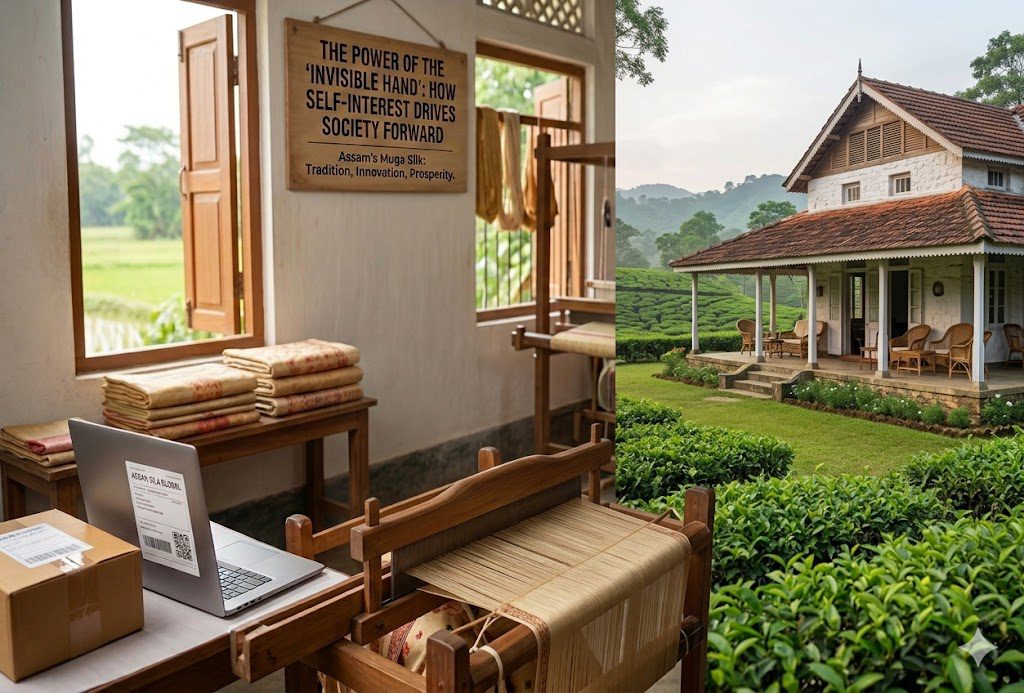
In 1776, the father of modern economics, Adam Smith, introduced a groundbreaking concept called the “Invisible Hand.” Put simply: Personal ambition and profit-seeking can accidentally lead to fantastic outcomes for everyone else. When individuals act in their own self-interest, they are guided by an “invisible hand” that naturally balances the market and solves society’s problems, even if that wasn’t their original intention.
As Adam Smith famously wrote:
“It is not from the benevolence of the butcher, the brewer, or the baker that we expect our dinner, but from their regard to their own interest.”
The Global Example: The Smartphone Race
Consider why smartphones get sleeker, faster, and packed with better cameras every single year.
Tech giants like Apple and Samsung aren’t pulling all-nighters out of pure love for humanity. Their primary goal is to beat the competition and make billions of dollars in profit. But here is the catch: to get your money, they are forced to innovate. The “Invisible Hand” takes their selfish desire for profit and turns it into a massive win for us. As a result, we get access to mind-blowing technology at highly competitive prices.
How the “Invisible Hand” Transforms Assam
To see the “Invisible Hand” in action, think about a tea estate owner or a traditional Muga silk weaver.
- They do not wake up every morning motivated by a desire to boost Assam’s GDP or provide employment out of pure charity.
- They work, produce high-quality tea, and weave intricate textiles because they want to earn a profit to feed their own families.
Yet, by chasing their own financial gain, they produce goods people want, create jobs for local communities, and keep the regional economy moving. It is as if an “invisible hand” is guiding their private greed to create a public good.The Invisible Hand isn’t just for global tech giants. It applies beautifully to regional economies, and it is already beginning to reshape Assamese society by driving growth, preserving heritage, and improving daily life.
Here is how the concept is working in Assam right now:
1. Reviving Muga and Eri Silk
Many traditional weavers in Assam create beautiful silk items but have historically faced financial struggles. Today, modern fashion entrepreneurs are stepping in.
- The Self-Interest: These entrepreneurs want to maximize their profits, capture market share, and beat their competitors.
- The Invisible Hand: To achieve this, they are forcing innovation—redesigning traditional Mekhela Chadors for global tastes and using e-commerce to sell directly to buyers in Mumbai, New York, and London.
- The Public Good: In chasing their own payday, these entrepreneurs inject foreign money into the state economy, create sustainable, high-paying jobs for rural weavers, and keep ancient Assamese craftsmanship thriving.
2. Revolutionizing Tea Tourism
For generations, Assam’s tea industry focused solely on selling tea leaves. Now, the focus is expanding.
- The Self-Interest: Tea estate owners want to tap into the lucrative global luxury travel market to boost their revenues.
- The Invisible Hand: They are converting historic British-era bungalows into luxury resorts, offering curated “tea tasting” experiences and nature walks. They aren’t doing this just to be nice hosts; they are doing it for premium returns.
- The Public Good: To run these resorts, owners must hire local youth as guides, chefs, and managers. Local taxi drivers, musicians, and artisans automatically get more business. A business owner’s desire for profit accidentally builds a thriving tourism ecosystem that puts Assam on the global travel map.
3. Cultivating Agriculture and Local Startups
The same magic is touching other sectors:
- Agri-preneurs are chasing high profits by exporting organic Joha rice, Bhut Jolokia, and Assam lemons globally, which naturally forces them to pay local farmers better prices and teach them modern techniques.
- Tech Startups are tackling local headaches—like Guwahati’s traffic or fresh fish delivery—not out of charity, but because solving a massive local problem is highly profitable.
The Big Takeaway for Assam
For the Invisible Hand to truly unlock Assam’s potential, the societal mindset needs to shift from dependency to enterprise. When the youth of Assam stop looking for handouts and are instead encouraged to build competitive, profitable businesses based on the state’s unique strengths—Tea, Silk, Agriculture, and Tourism—everyone wins. Their personal success will naturally create wealth, generate employment, and bring immense pride and prosperity to the entire state.